Az-Zubayr ibn al-ʿAwwām
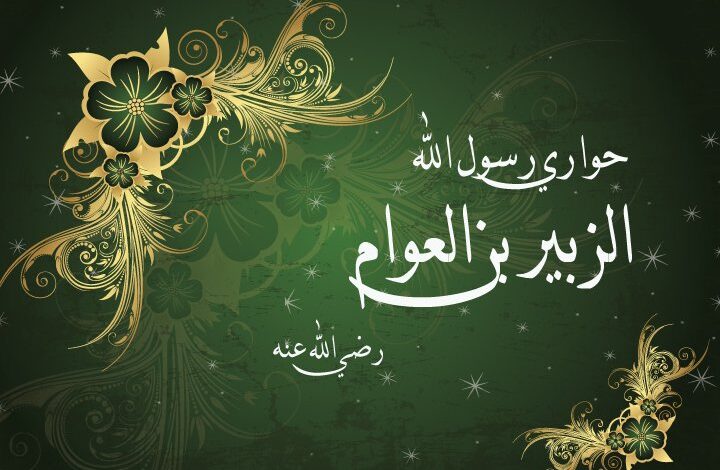
The sixth mirror is the life of the Ḥawārī of the Messenger of Allāh ﷺ—the disciple whose courage never sought the rear rank, whose loyalty was tested in the hardest hours, and whose final choice was to lay down his sword rather than continue a fight among the Companions.
Az-Zubayr ibn al-ʿAwwām
Abū ʿAbdullāh az-Zubayr ibn al-ʿAwwām ibn Khuwaylid ibn Asad ibn ʿAbd al-ʿUzzā ibn Quṣayy al-Qurashī al-Asadī. His mother was Ṣafiyyah bint ʿAbd al-Muṭṭalib, the aunt of the Messenger of Allāh ﷺ. He was therefore the Prophet’s cousin through both paternal and maternal lines. He was born in Makkah twenty-eight years before the Hijrah and was killed at the Battle of the Camel in the year 36 AH at the age of sixty-four or sixty-seven according to differing reports.
Ibn Saʿd, Ibn ʿAbd al-Barr, Ibn al-Athīr, and adh-Dhahabī describe him as tall, strongly built, darkish of complexion, with a thick beard and a commanding presence. Adh-Dhahabī opens his entry in Siyar Aʿlām an-Nubalāʾ by calling him “the Ḥawārī of the Messenger of Allāh ﷺ, one of the ten promised Paradise, one of the six of the shūrā, the knight of Islām, the one who never remained behind from a battle with the Prophet.”
He accepted Islām as a youth—among the earliest—while still under the age of fifteen according to several reports. He was tortured for his faith; his uncle would wrap him in a mat and light a fire beneath it so that the smoke would choke him, yet he refused to return to the old religion. He migrated to Abyssinia in the first hijrah, then returned, then migrated to Madīnah. The Messenger of Allāh ﷺ formed a bond of brotherhood between him and ʿAbdullāh ibn Masʿūd, and later between him and one of the Anṣār.
His courage was proverbial. At Badr he was in the front ranks. At Uḥud he stood firm. At the Trench the Messenger of Allāh ﷺ asked, “Who will bring me news of the Banū Qurayẓah?” Az-Zubayr went. The Prophet said on that day: “Every prophet has a ḥawārī, and my ḥawārī is az-Zubayr.” The report is in al-Bukhārī and Muslim. At Khaybar he fought with distinction. On the day of the Conquest of Makkah he was one of the commanders. He never missed a major engagement with the Messenger of Allāh ﷺ.
The Prophet ﷺ once said to him words preserved in the books of manāqib: “May my father and mother be ransomed for you.” On another occasion, when az-Zubayr complained of fever or hardship, the Prophet prayed for him. He was among those concerning whom the Messenger of Allāh ﷺ testified that they would be in Paradise.
He was one of the six named by ʿUmar for the shūrā after him. During the years of ʿUthmān’s Khilāfah he remained a senior counsellor. After the martyrdom of ʿUthmān he initially supported the demand for justice, yet when the armies faced one another at the Camel he withdrew from the fighting. The reports in aṭ-Ṭabarī, Ibn Kathīr, and the earlier sources indicate that he remembered a prophecy of the Messenger of Allāh ﷺ concerning a battle in which he would be wrong and would leave. He left the field, and was killed while departing by a man named ʿAmr ibn Jurmūz. ʿAlī ibn Abī Ṭālib, upon hearing of his death, said words of sorrow and prayed for mercy upon him. His killer found no lasting honour; the historians record that ʿAlī refused to reward him and that the man later met a miserable end.
Az-Zubayr’s personality combined fierce bravery with a surprising restraint at the critical moment. He amassed wealth through trade and the grants of the early conquests, yet the reports show him as generous and quick to spend. He left behind a large estate, but also a reputation for having been among the most courageous of the Companions in the lifetime of the Prophet ﷺ.
Adh-Dhahabī gathers the testimonies of the Salaf: he was the Ḥawārī, the knight, one of the ten, one of the six, the cousin of the Messenger of Allāh ﷺ through two lines. Ibn Ḥajar in al-Iṣābah and Ibn ʿAbd al-Barr confirm the consensus upon his high rank. The books of maghāzī repeatedly return to his name whenever the hardest fighting is described.
He was buried in Baṣrah. His son ʿAbdullāh later became a major figure in his own right, yet the father’s legacy remains distinct: the man who never lagged behind while the Messenger of Allāh ﷺ was alive, and who chose to step away when the fighting turned inward among the Companions.
This is the sixth mirror.
Look into it until you learn that the highest courage is not only the charge into the ranks of the enemy, but also the ability to recognise the moment when continuing the fight would wound the Ummah more than it would heal it, and to lay down the sword in obedience to a remembered warning from the Messenger of Allāh ﷺ.
Ahsanallāhu ‘Ilaykum.