Saʿd ibn Abī Waqqāṣ
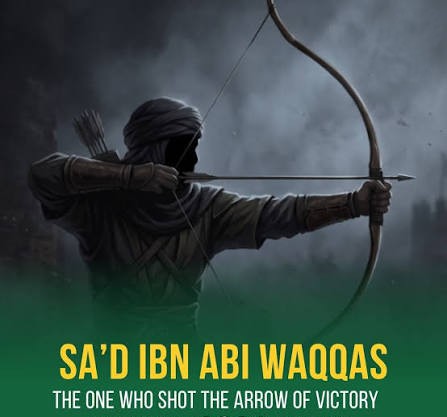
The fifth mirror is not merely the life of a commander who opened the lands of Kisrá. It is the life of a man for whom the Messenger of Allāh ﷺ gathered both his parents in a single invocation, for whom verses of the Qurʾān were revealed that continue to be recited until the Day of Judgement, and whose arrow was the first to fly in the path of Allāh.
Saʿd ibn Abī Waqqāṣ
Abū Isḥāq Saʿd ibn Mālik ibn Wuhayb (or Uhayb) ibn ʿAbd Manāf ibn Zuhrah ibn Kilāb al-Qurashī az-Zuhrī. His mother was Ḥamnah bint Sufyān ibn Umayyah. He was born in Makkah approximately twenty-three years before the Hijrah and died at al-ʿAqīq near Madīnah in the year 55 AH according to the preferred view of adh-Dhahabī, though other reports place it in 56 or 58 AH. He was the last of the Muhājirūn to die.
Ibn Saʿd, Ibn ʿAbd al-Barr in al-Istīʿāb, Ibn al-Athīr in Usd al-Ghābah, and adh-Dhahabī in Siyar Aʿlām an-Nubalāʾ all record that he was among the earliest to accept Islām—while still a youth of seventeen. He himself said, as reported in Ṣaḥīḥ al-Bukhārī:
«لَقَدْ رَأَيْتُنِي وَأَنَا ثُلُثُ الْإِسْلَامِ»
“I have seen myself when I was one-third of Islām.”
And in another narration: “No one accepted Islām on the day I accepted it; I remained seven days and I was one-third of Islām.”
His mother, distressed by his conversion, refused food and drink and swore she would not speak to him until he abandoned the new religion. He remained firm and said: “By Allāh, even if you had a hundred souls and they departed one by one, I would not leave this Dīn.” Allāh then revealed concerning him the verses of Luqmān (31:15) and related passages commanding kindness to parents while forbidding obedience in shirk. Muslim records a longer narration from Saʿd himself in which several verses—concerning the parents, the anfāl, and the prohibition of wine—were linked to incidents in his life. Ibn Hubayrah commented that this is a mark of high rank: that Allāh revealed verses whose rulings remain until the Day of Judgement and whose barakah continues to return upon the one concerning whom they were sent down.
The Messenger of Allāh ﷺ singled him out with a distinction shared with very few. On the day of Uḥud he said to him repeatedly:
«ارْمِ فِدَاكَ أَبِي وَأُمِّي»
“Shoot, may my father and mother be ransomed for you.”
Saʿīd ibn al-Musayyib heard Saʿd say: “The Prophet ﷺ gathered both his parents for me on the day of Uḥud.” ʿAlī ibn Abī Ṭālib confirmed: “The Messenger of Allāh ﷺ did not gather both his parents for anyone except Saʿd ibn Mālik.” The reports are in al-Bukhārī and Muslim. An-Nawawī and others note the rarity and honour of this dual fidāʾ.
Another of his established manāqib is the night he came unbidden to guard the Messenger of Allāh ﷺ. ʿĀʾishah reported that the Prophet was restless one night and said, “Would that a righteous man from my Companions would guard me tonight.” They heard the sound of weapons; it was Saʿd. He said, “Fear for the Messenger of Allāh ﷺ fell into my heart, so I came to guard him.” The Prophet prayed for him and then slept until they heard his gentle snoring. The ḥadīth is in al-Bukhārī (in two places), Muslim, at-Tirmidhī, and Aḥmad.
He was the first to shoot an arrow in the path of Allāh. He himself said: “I am the first Arab to shoot an arrow in the cause of Allāh.” He fought at Badr, Uḥud—where he remained when many fled—and every major campaign. At the Conquest of Makkah he carried one of the banners of the Muhājirūn. Later, under the Khilāfah of ʿUmar, he was given overall command of the armies of Iraq. The battle of al-Qādisiyyah, the fall of al-Madāʾin, and the founding of Kūfah unfolded under his leadership. Adh-Dhahabī records: “The conquest of Iraq was at the hands of Saʿd; he was the commander of the armies on the day of al-Qādisiyyah, and Allāh gave victory to His religion.”
He was one of the ten promised Paradise and one of the six named by ʿUmar for the shūrā. ʿUmar said of him: “If Saʿd is given the authority, that is good; and if another is given it, then let him seek the help of Saʿd.” After the martyrdom of ʿUthmān he withdrew completely from the fitnah. When his son ʿUmar and others urged him to claim leadership, he refused and remained with his flock, saying he had heard the Messenger of Allāh ﷺ say: “Allāh loves the servant who is god-fearing, free of want, and hidden.” The report is in Muslim and Aḥmad.
His supplications were answered. The Prophet ﷺ prayed that his duʿāʾ be accepted, and the books of history preserve instances in which those who wronged him or falsely accused him suffered visible consequences. At the approach of death he asked to be shrouded in a worn woollen garment he had worn at Badr, saying, “I met the polytheists in it on the day of Badr; I have kept it for this day.” He told his son Muṣʿab, who was weeping: “Do not weep; Allāh will never punish me. I am of the people of Paradise.” Adh-Dhahabī remarked: “He spoke the truth, by Allāh; glad tidings to him.”
The classical works—among them Muḥḍ al-Khalāṣ fī Manāqib Saʿd ibn Abī Waqqāṣ by Ibn al-Mibrad, the entries in Siyar Aʿlām an-Nubalāʾ, al-Bidāyah wan-Nihāyah, Usd al-Ghābah, and the collections of manāqib—gather these and further reports. The poets of later generations continued to praise him. it was said about him:
أبو إسحاقَ سعدُ، له ودادُ
لجدِّ المصطفى يسمو امتدادُ
فكان الخالَ مُفتَخرًا بقُربٍ
لخير المرسلينَ له انفرادُ
…
وأولُ مَن رمى لله سهمًا
له في الأرضِ صيتٌ وارتدادُ
(فداكَ أبي وأمي) سعدُ فارْمِ الـ
ـعدوَّ، فليس يُخطِئُكَ السَّدادُ
The earlier generations had already fixed his rank with the decisive texts of the two Ṣaḥīḥs and the consensus of the historians of the Salaf.
He was carried from al-ʿAqīq to Madīnah and buried in al-Baqīʿ. Umm Salamah wept and said: “The remainder of the Companions of the Messenger of Allāh ﷺ.”
This is the fifth mirror.
Look into it until you learn that the first arrow released in the path of Allāh may be followed, decades later, by the quieter courage of withdrawing from power when power would cost the Ummah its remaining unity, and that the man for whom the Messenger of Allāh ﷺ ransomed both his parents remains a standard of early sacrifice, answered prayer, and deliberate restraint.
May Allāh grant us the Tawfīq and Sadād of Sa’ad.
Bārakallāhu Fīkum.