Britain’s Calculated Assault on the Sharī‘ah and the Unity of the Ummah
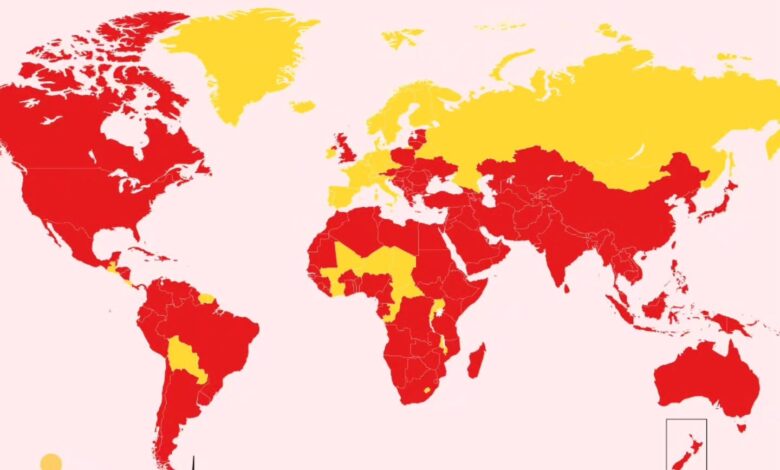
About the British designs against Islām and the deliberate engineering of Muslim weakness, the pages of history overflow. Where the French often relied on open massacre and scorched earth, the British perfected a colder, more systematic project: the dismantling of Islamic political authority, the confinement and eventual marginalisation of the Sharī‘ah, the Westernisation of Muslim elites, and the permanent sowing of division so that the Ummah might never again rise to supremacy under the rule of Allāh’s law.
From the plains of India to the deserts of Arabia and the shores of East Africa, British colonialism cohered around one overarching aim — to ensure that Muslims would never again govern themselves by the Sharī‘ah or recover the political unity that had once made them a force capable of checking European power.
In India, the heart of the British imperial project in the Muslim world, the process began early. After the East India Company acquired the Dīwānī of Bengal in 1765, the Sharī‘ah was gradually restricted. Criminal law was stripped of its Islamic character through successive regulations; by the early nineteenth century it had been replaced in substance by British norms while retaining a hollow Islamic label. Qāḍīs and muftīs were first subordinated, then displaced.
Civil and commercial matters were placed under English principles of “justice, equity and good conscience.” What remained of Islamic law was confined largely to personal status — marriage, inheritance, and waqf — and even there it was filtered through Anglo-Muhammadan constructions produced by colonial courts and translations. The great madrasas and centres of learning that had sustained the intellectual life of the Mughal domain were starved of patronage or brought under surveillance. After the uprising of 1857, the British resolved never again to allow a Muslim political revival. Queen Victoria’s proclamation of non-interference in religion was accompanied by policies that systematically weakened the institutional bases of Islamic authority.
Education became a primary instrument of de-Islamisation. Thomas Babington Macaulay’s Minute of 1835 openly declared the intention to create “a class of persons, Indian in blood and colour, but English in taste, in opinions, in morals, and in intellect.” English-language schooling and the new colleges produced generations of Muslims trained to view the Sharī‘ah as backward and Western institutions as the measure of progress.
The same pattern was repeated in Egypt under Lord Cromer, where the British occupation after 1882 limited the Sharī‘ah to personal matters, expanded secular courts, and promoted a Westernised elite while keeping real power firmly in British hands. The goal was not merely administrative convenience; it was to render the recovery of a Sharī‘ah-based state unthinkable to the very class that would inherit formal independence.
Divide and rule was applied with clinical precision. In India the British cultivated communal electorates, separate representation, and narratives that hardened Hindu-Muslim boundaries, culminating in the trauma of Partition in 1947 — a wound that continues to bleed in the form of enduring hostility between the successor states. In the Arab world the same principle produced the Sykes-Picot Agreement of 1916 and the subsequent mandate system. Secret arrangements with France carved the former Ottoman Arab provinces into artificial entities designed to be weak, dependent, and mutually suspicious.
The Balfour Declaration of 1917 committed Britain to a “national home for the Jewish people” in Palestine while promising Arabs independence that was never fully honoured. The result was the implantation of a permanent source of conflict at the heart of the Muslim world and the creation of borders that cut across peoples, tribes, and historical units of belonging. Sudan was governed through a policy that reinforced north-south and religious-ethnic cleavages; similar tactics were employed in Nigeria’s Muslim north and elsewhere. The British preferred a fragmented Ummah of competing nationalisms to a restored Islamic polity capable of coordinated resistance.
Economic exploitation reinforced political subjugation. In Malaya, tin mines and later rubber plantations were worked by vast numbers of indentured labourers shipped from India under conditions that contemporary observers compared to a new form of slavery. Across the empire, systems of forced labour, corvée, and indenture extracted wealth while leaving local populations impoverished. In India itself, colonial revenue policies and the prioritisation of cash crops contributed to catastrophic famines that killed millions. Resources flowed outward; sovereignty and the capacity for independent Islamic economic life were systematically undermined.
The British understood that a Muslim world still capable of thinking in terms of the Sharī‘ah and the unity of the Ummah would eventually challenge European dominance. Their answer was to confine the Sharī‘ah to the private sphere, to produce Westernised intermediaries who would administer secular states, and to leave behind borders, communal identities, and unresolved conflicts that would keep Muslim societies divided and preoccupied.
The legacy endures: the permanent hostility generated by Partition, the unresolved question of Palestine, the artificial states of the Mashriq that have repeatedly collapsed into civil strife, and the continuing difficulty of any serious project of Islamic political revival. Even after formal independence, the educational, legal, and political structures bequeathed by Britain continued to orient Muslim elites toward Western models and away from the comprehensive claim of the Sharī‘ah.
This is the British record. Where open massacre was sometimes employed, the deeper strategy was cultural, legal, and political: to make the return of Muslim supremacy under the rule of Allāh’s law appear impossible, and to ensure that the Ummah would remain fractured by the very identities and borders the coloniser had cultivated.
The Muslims of later generations still live inside the consequences of that design. Remind them of this history.
Bārakallāhu Fīkum