The Architects of Containment: Lord Cromer and Frederick Lugard
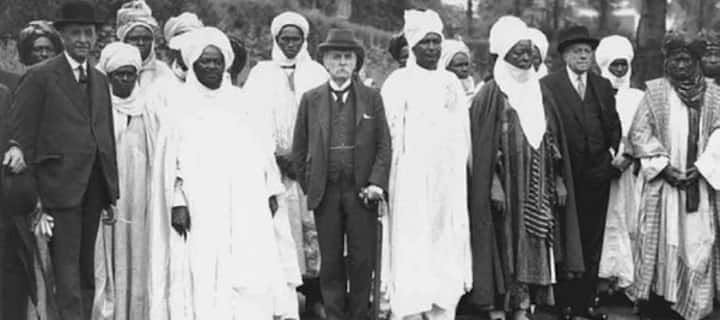
In the long campaign to subordinate the Muslim world, two British proconsuls stand out for the clarity of their vision and the transfer of methods from one theatre to another: Evelyn Baring, Lord Cromer, the virtual ruler of Egypt from 1883 to 1907, and Frederick Lugard, the conqueror and organiser of Northern Nigeria and later the theorist of indirect rule across tropical Africa. Both men carried experiences and assumptions from earlier imperial arenas — India in Cromer’s case, East Africa and the Indian model in Lugard’s — and applied them to Muslim societies with the deliberate aim of preventing the recovery of Sharī‘ah-based political supremacy.
Their writings and administrative practice reveal a consistent diagnosis: Islam as a social and political system was rigid, resistant to reform on its own terms, and therefore required external management if it was not to obstruct the advance of Western civilisation.
Cromer’s most explicit statements appear in his two-volume work Modern Egypt (1908). Reflecting on the possibility of reforming Muslim society from within, he wrote:
> “In dealing with the question of introducing European civilisation into Egypt, it should never be forgotten that Islam cannot be reformed; that is to say, reformed Islam is Islam no longer; it is something else; we cannot yet tell what it will eventually be.”
He reinforced the point by quoting the missionary-historian William Muir: “Christian nations may advance in civilisation, freedom, and morality, in philosophy, science, and the arts, but Islam stands still.”
For Cromer, Islam as a social system had “been a complete failure.” It crystallised “religion and law into one inseparable and immutable whole, with the result that all elasticity is taken away from the social system.” He regarded the ‘ulamā’ of al-Azhar as an obstacle rather than a resource; their predominance, he believed, would have produced greater “corruption, misgovernment, and oppression” than Egypt had previously known. The practical consequence was a policy that confined the Sharī‘ah largely to personal status, expanded secular courts and codes, limited higher education that might strengthen independent Islamic thought, and cultivated a class of Europeanised Egyptians who, in his view, stood in a gulf as wide from the traditional ‘ālim as from the European himself.
Cromer’s experience in India, where he had served in financial administration, shaped his Egyptian methods. He had seen the risks of an educated class that turned nationalist; in Egypt he therefore restricted educational expenditure, imposed fees, and favoured vocational over classical learning. When the Denshawai affair of 1906 produced a severe judicial response, it was consistent with a broader determination to maintain prestige and deter any challenge to the occupation. Muslim observers and later Egyptian historians regarded Cromer’s tenure as the period in which the institutional foundations of a Sharī‘ah-ordered state were systematically weakened and replaced by administrative and legal structures oriented toward Europe.
Lugard transferred and adapted similar principles to West Africa. In The Dual Mandate in British Tropical Africa (1922) he articulated the imperial rationale with unusual frankness:
> “Let it be admitted at the outset that European brains, capital and energy have not been, and never will be, expended in developing the resources of Africa from motives of pure philanthropy; that Europe is in Africa for the mutual benefit of her own industrial classes, and of the native races in their progress to a higher plane; that the benefit can be made reciprocal, and that it is the aim and desire of civilised administration to fulfil this dual mandate.”
On Islam itself he wrote that it was “a religion incapable of the highest development,” yet one whose “limitations clearly suit the limitations of the people.” It had, in his judgment, abolished certain “gross forms of pagan superstition” and conferred a measure of dignity and self-control, but it remained subordinate to the civilising mission directed by Britain. After the military conquest of the Sokoto Caliphate (1903), Lugard instituted indirect rule: emirs retained outward authority and the administration of a restricted Sharī‘ah in personal and certain civil matters, yet ultimate power — including the right to appoint, depose, and legislate — rested with the British. He assured the conquered rulers that the government would “in no way interfere with the Mohammedan religion,” while simultaneously ensuring that native law conformed to British standards of justice and that the emirs became salaried agents of the colonial state. Criminal penalties such as amputation were curtailed. Western administrative practices and the gradual introduction of English law in higher courts completed the subordination.
The transfer of experience is evident. Cromer’s India-informed caution about educated elites and his confinement of the Sharī‘ah in Egypt prefigured Lugard’s determination to preserve Islamic institutions only insofar as they served colonial order. Lugard’s dual mandate — exploitation for imperial benefit alongside a controlled “progress” of the native — echoed the utilitarian calculus that had guided Cromer. Both men treated Islam as a force to be managed rather than allowed to determine the political horizon. Both preferred collaboration with compliant Muslim authorities over the risks of direct confrontation or genuine Islamic self-rule. And both left behind legal and constitutional frameworks in which the Sharī‘ah, once the comprehensive public law of the land, survived only in truncated form.
Muslim historians and intellectuals have long recognised the coherence of this project. The subordination of the Sokoto Caliphate, the dismantling of effective Sharī‘ah jurisdiction in Egypt, and the destruction of the Mahdist state in Sudan (in which Cromer played a supervisory role from Cairo) were not isolated episodes but parts of a single imperial logic: to prevent the re-emergence of Muslim political supremacy ordered by the Sharī‘ah and to orient the successor elites toward Western models of state and civilisation. The writings of Cromer and Lugard themselves supply the clearest evidence of intent. Their methods moved from India to Egypt, from Egypt to Sudan, and from the Indian and East African experiences into Northern Nigeria, leaving a legacy of truncated Islamic law, Westernised constitutional forms, and a persistent orientation toward the West that subsequent generations of Muslims have struggled to reverse.
This is the record of the two great architects of containment. Remind the Ummah of their words and their works.
May Allah return the Ummah to its days of Glory, āmīn
Bārakallāhu Fīkum.