Imām ʿAbd al-Qādir al-Jazāʾirī: The Amīr of the Jihād and the Knight of the Sharīʿah
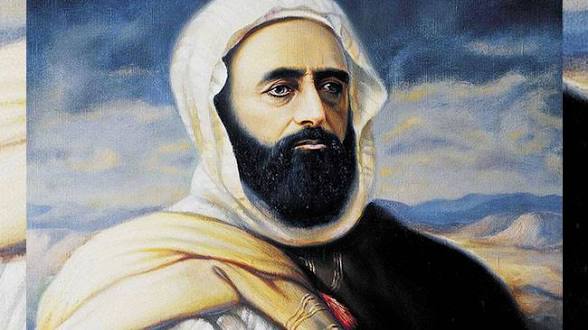
In the thirteenth century after the Hijrah, when the French armies landed on the shores of Algeria in 1830 and began one of the longest and most destructive colonial occupations in modern Muslim history, Allāh raised a young scholar and Sufi whose name would become synonymous with principled resistance. Imām ʿAbd al-Qādir ibn Muḥyī al-Dīn al-Ḥasanī al-Jazāʾirī (1223–1300 AH / 1808–1883 CE), known throughout the world as Emir Abdelkader, combined the learning of the ʿulamāʾ, the spiritual discipline of the Qādiriyya, the skill of a military commander, and a commitment to justice that astonished even his enemies. For fifteen years he led the Muslims of Algeria in jihād against a technologically superior European power, established a functioning Islamic state governed by the Sharīʿah, and later, in exile, demonstrated that the ethics of Islam extend even to the protection of non-Muslims in times of chaos.
Born on 6 September 1808 (15 Rajab 1223 AH) in the village of al-Qayṭana near Mascara in western Algeria, ʿAbd al-Qādir belonged to a family of sharīfī descent that traced its lineage to the Prophet ﷺ through the Idrīsids. His father, Muḥyī al-Dīn, was a respected muqaddam of the Qādiriyya ṭarīqa and a man of both knowledge and influence.
The young ʿAbd al-Qādir received a thorough education in the Qur’ān, ḥadīth, fiqh, Arabic literature, and the spiritual sciences. He was known from an early age for his piety, horsemanship, and ascetic inclination. In 1825–1826 he accompanied his father on the Ḥajj, visiting Damascus, Baghdad, and other centres of learning, experiences that broadened his horizon and deepened his attachment to the wider Ummah.
When the French captured Algiers in 1830 and began expanding into the interior, the tribes of the West sought a leader capable of unifying them. In November 1832, at a gathering near Mascara, the young ʿAbd al-Qādir—then about twenty-four years old—was chosen as Amīr al-Muʾminīn after his father declined the burden on account of age. He accepted the bayʿah on the explicit condition that his authority would be exercised according to the Qur’ān and the Sunnah. He declared that his aim was the unification of the Muslims, the prevention of injustice, the security of the roads, the implementation of the pure Sharīʿah, and the defence of the land against the invader. He refused the title of sulṭān, preferring to remain Amīr, and grounded his legitimacy in a fatwa that made support for the jihād and the payment of the necessary taxes a duty upon the community.
Between 1832 and 1847 ʿAbd al-Qādir built a state that stretched at its height across much of western and central Algeria. He organised a regular army with uniforms and salaries, established arsenals and workshops for the manufacture of weapons, created a system of taxation applied equally without the old privileges of certain warrior tribes, and appointed qāḍīs to administer justice according to the Mālikī school. His capital shifted between Mascara and the fortified town of Tagdemt (Tiaret). He divided the territory into administrative districts under khalīfas, āghās, and qāʾids, all bound by the Sharīʿah. Contemporary observers noted that he did not take for himself a surplus of wealth, that he ruled by consultation (shūrā) in matters of war and peace, and that he sought to make the law of Allāh the standard for strong and weak alike.
In the periods of truce, particularly after the Treaty of Tafna in 1837, he consolidated this Islamic polity and extended his authority over tribes that had long lived in mutual rivalry.
His conduct of war was marked by a rare combination of strategic skill and ethical restraint. He inflicted significant defeats on French forces, most notably at the Battle of Macta in 1835. Yet he became equally famous for his treatment of prisoners. He forbade the killing of captives, provided them with food and medical care, and on several occasions released French officers as a gesture of goodwill or in exchange. He invited a Christian priest to his camp to minister to the prisoners, writing that the priest would lack nothing and would be treated with respect. European officers who fell into his hands later testified to a standard of humanity that surpassed the norms of the age. One British observer remarked that the generous care shown by the Emir toward prisoners of war had no parallel in the history of warfare. This conduct was not a concession to European opinion; it was an application of the Sharīʿah’s rules governing the treatment of non-Muslim combatants and the fulfilment of covenants.
The French, under commanders such as Bugeaud, responded with a policy of total war: the destruction of crops, the burning of villages, and the systematic devastation of the countryside in order to starve the resistance into submission. In 1843 the Amīr’s mobile encampment (smala) was captured. Despite continued guerrilla resistance, the pressure became unsustainable. In December 1847, after fifteen years of struggle, seeing the conditions of the Ummah, the littleness of arms and technological inferiority, Imām ʿAbd al-Qādir agreed to discontinue the Jihād against the French, as a truce, on the condition that he and his followers would be allowed to go into exile in the Muslim East. The French government violated the agreement and imprisoned him in France for nearly five years, first at Toulon, then at Pau, and finally at the Château d’Amboise.
During his captivity he maintained his dignity, engaged in scholarly discussions, and impressed his captors with his learning and composure. In 1852 Louis-Napoléon ordered his release. ʿAbd al-Qādir was permitted to settle first in Bursa and then, in 1855, in Damascus, under Ottoman protection.
It was in Damascus that the Amīr performed one of the most celebrated acts of his later life. In July 1860, during inter-communal violence that swept through Mount Lebanon and reached Damascus, mobs attacked the Christian quarters of the city. ʿAbd al-Qādir, then in his early fifties, gathered his Algerian followers and local allies, opened his house and the houses of his companions, and personally led efforts to rescue Christians from the streets. Contemporary estimates credit him with saving between ten and fifteen thousand lives. He confronted the rioters directly, rebuking them as betrayers of the Shar’ī ethic of protection for non-Muslim subjects (Dhimmīs), and placed the refugees under his armed guard until order was restored. For this action he received decorations and letters of gratitude from European powers, the Ottoman Sultan, and the Pope.
Yet for Muslims the episode stands as a demonstration that the same man who had waged jihād against colonial invasion remained bound by the moral limits of the Sharīʿah even when the victims were Christians and the perpetrators claimed to act in the name of Islam.
ʿAbd al-Qādir spent his final decades in Damascus in study, writing, and spiritual instruction. He composed works of spiritual and theological character, received visitors from across the Muslim world, and maintained a quiet dignity that commanded respect. He died on 26 May 1883 (1300 AH) and was buried in Damascus. In 1966 his remains were transferred to Algeria and interred near the capital, where he is honoured as a national hero and a symbol of resistance.
The lessons of his life are many and profound. Jihād in the path of Allāh is not a licence for unrestricted violence; it is governed by the ethics of the Sharīʿah, including the proper treatment of prisoners and the fulfilment of covenants. A Muslim state can be organised on the foundations of the Qur’ān and Sunnah *even under conditions of existential threat.* Leadership requires both the ability to unify fractious tribes under the banner of Islam and the humility to refuse titles that inflate the self. The same commitment to justice that drives resistance against the oppressor must also restrain the believer from oppressing others when the opportunity arises.
From the battlefields of Algeria to the streets of Damascus, Imām ʿAbd al-Qādir embodied a consistent moral vision rooted in the Dīn.
He stands in the long line of Algerian resistance that began with the first refusals of 1830, continued through his own fifteen-year struggle, found later expression in the cultural and educational revival of Ibn Bādīs and the Association of Algerian Muslim Ulama, and culminated in the war of independence of 1954–1962.
In every phase the underlying conviction remained the same: that the land of Algeria is a Muslim land, that its people are bound by the Sharīʿah, and that no colonial power has the right to erase that identity.
May Allāh have mercy upon Imām ʿAbd al-Qādir al-Jazāʾirī, accept his jihād, his patience, and his protection of the innocent, and raise his rank among the righteous leaders of the Ummah. Āmīn
Bārakallāhu fīkum.