The Mujaddid of Algeria: Imām ʿAbd al-Ḥamīd ibn Bādīs
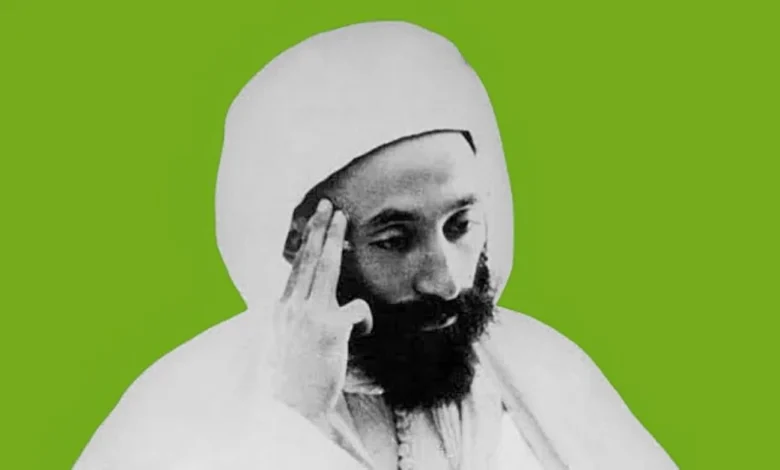
In the fourteenth century after the Hijrah, as the French occupation of Algeria entered its second century and intensified its project of cultural erasure, Allāh raised a scholar who understood that the deepest resistance begins with the renewal of the Dīn. Imām ʿAbd al-Ḥamīd ibn Muṣṭafā ibn Makkī ibn Bādīs (1307–1359 AH / 1889–1940 CE) stands as the pre-eminent mujaddid of modern Algeria. His life and work form a vital link in the long chain of Algerian resistance that stretches from the armed jihād of Amīr ʿAbd al-Qādir al-Jazāʾirī in the nineteenth century to the war of independence that erupted in 1954.
Born in Constantine on 4 December 1889 into a family of established standing, Ibn Bādīs memorised the Qur’ān early and received a traditional education. He studied at the Zaytūna Masjid -University in Tunis, then travelled to the Ḥijāz and Egypt, where he absorbed the reformist current associated with Muḥammad ʿAbduh and Rashīd Riḍā. He returned to Algeria in 1913 determined to revive the faith of his people through a return to the Qur’ān and Sunnah. One of his teachers had extracted from him a solemn promise never to enter the service of France. He began teaching at al-Jāmiʿ al-Akhḍar in Constantine, offering continuous lessons in tafsīr and the foundational sciences, and soon turned to the press as a means of wider daʿwah.
In 1925 he founded the journal al-Muntaqid (“The Critic”), followed shortly by al-Shihāb (“The Meteor”), which became the principal platform of Islam’s reform in Algeria until its closure in 1939. Through these publications he called for the purification of belief and practice from innovations and superstitions, the restoration of Arabic as the language of knowledge and identity, and the rejection of assimilation into French civilisation.
He wrote:
“There is no salvation for us from the confusion and suffering we endure except by returning to the Qur’ān and its knowledge and guidance.” On the centrality of education he declared: “Nothing is more indicative of the presence of the spirit of life within a nation, of its awareness of itself and its desire for progress, than its adoption of the means of education.”
When a student asked him by what means he fought colonialism, he replied: “I fight colonialism because I teach and cultivate character. Whenever education and moral refinement spread in a land, it becomes barren for colonialism, which in the end senses the evil of its fate.”
In May 1931, together with a group of reformist scholars, he founded the Association of Algerian Muslim Ulama (Jamʿiyyat al-ʿUlamāʾ al-Muslimīn al-Jazāʾiriyyīn). Its famous motto, which became the ideological cornerstone of Algerian national consciousness, was: “Islām is our religion, Arabic is our language, Algeria is our homeland.” The Association established a nationwide network of free Madāris that taught the Qur’ān, Arabic grammar and literature, the history of the Ummah, and the essentials of the Sharī‘ah.
By the 1950s these schools numbered in the hundreds and educated tens of thousands of boys and girls, forming a generation that knew its identity was not French. Ibn Bādīs himself stated that he would rather take a bullet to his chest than allow the French language to displace Arabic in the schools of the Muslims.
His most celebrated political statement came in 1936 in reply to Ferhat Abbas, who had written that he could find no trace of an Algerian fatherland and therefore regarded France as his homeland. Ibn Bādīs answered in al-Shihāb:
> “We, too, have searched history and the present and have determined that an Algerian nation was formed and exists in the same way as all other nations were formed and exist. It has its religious and linguistic unity, its culture, its traditions… This Muslim Algerian nation is not France, cannot be France, and does not wish to be France.”
This declaration linked the religious reform of the ʿulamāʾ to the emerging national consciousness and stood in clear continuity with earlier resistance. In the nineteenth century, Amīr ʿAbd al-Qādir had fought a prolonged armed jihād against the French invasion, establishing an Islamic state based on the Sharī‘ah in the interior before his capture in 1847. The massive popular uprisings of 1871 and the persistent refusal of large sections of the population to accept French citizenship without abandoning the personal status of the Sharī‘ah demonstrated that the will to remain Muslim had never been extinguished. Ibn Bādīs translated that enduring refusal into a systematic cultural and educational programme. He opposed the colonial policy that sought to confine the Sharī‘ah to a residual personal status while imposing French law, language, and values in every public domain.
His reform was simultaneously a purification of Algerian Islam from internal weaknesses and a rejection of the Westernisation that French rule presented as the only path to progress.
Although Ibn Bādīs died in Constantine on 16 April 1940, before the outbreak of the armed revolution, his influence on the later struggle was profound. Al-Bashīr al-Ibrāhīmī, his close collaborator and successor as leader of the Association, later stated that the first voice calling for the liberation of Algeria was an echo of Ibn Bādīs, and that the first bricks of the revolution were laid by him.
Many of the teachers and students formed in the Association’s schools went on to support or join the National Liberation Front (FLN) after 1954. The war of independence (1954–1962), with its immense sacrifices, was the political and military culmination of a longer process of identity recovery in which Ibn Bādīs’s work of tajdīd had been decisive. The French had sought, over 132 years, to make Algeria an extension of France; Ibn Bādīs and the Association ensured that a generation arose which knew that Algeria was Muslim, Arabic in language and culture, and irrevocably distinct.
The lessons of his life remain clear. The most dangerous colonialism is the one that captures the mind and the tongue. Resistance therefore requires the restoration of the Qur’ān and Sunnah as the primary sources of guidance, the revival of the Arabic language as the vehicle of Islamic knowledge, and the patient building of institutions that form character and identity. The Sharī‘ah is not merely a private code but the framework of a collective Muslim personality that refuses assimilation. The work of the mujaddid may appear gradual and educational, yet it prepares the ground upon which later generations can stand with clarity and resolve. From the armed resistance of ʿAbd al-Qādir, through the cultural and religious renewal of Ibn Bādīs, to the war of liberation that finally ended French rule, the thread of Algerian Muslim steadfastness remained unbroken.
May Allāh have mercy upon Imām ʿAbd al-Ḥamīd ibn Bādīs, accept his striving for the revival of the Dīn, and raise his rank among the renewers who stood firm against the erasure of the Ummah’s identity.
Bārakallāhu fīkum.