Shaykh Aḥmadu Bamba: The ‘Ālim who stood out
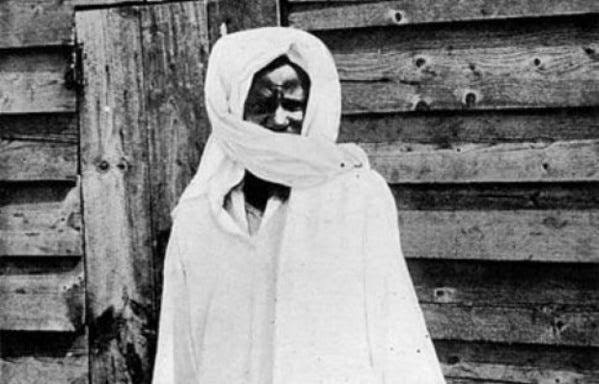
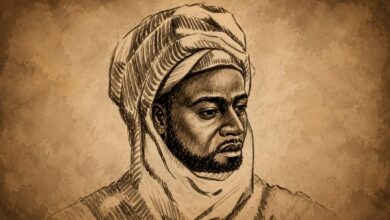
In the latter half of the thirteenth century after the Hijrah, as French colonial power consolidated its hold over Senegal and sought to reshape its society through assimilation, military domination, and the erosion of Islamic institutions, Allāh raised a scholar whose resistance took a form distinct from the armed struggles of many of his contemporaries. Shaykh Aḥmad ibn Muḥammad ibn Ḥabīb Allāh Mbàkke (1853–1927 CE), known to his followers as Khadīm al-Rasūl (the Servant of the Messenger), Serigne Touba, and Aḥmadu Bamba, founded the Murīdiyya order and led one of the most enduring spiritual and cultural resistances to Western colonialism in West Africa. His was a jihād of intellectual battle against ignorance, and against the cultural erasure imposed by the colonial state — conducted through education, disciplined work, prolific authorship, and an unyielding refusal to submit the heart to any authority but Allāh and His Messenger.
Born in 1853 in the village of Mbacké-Baol in the kingdom of Baol (present-day Senegal) into a family of established Qur’ān teachers and Sufi scholars, Aḥmadu Bamba received a rigorous traditional education. His father, Momar Anta Saly, was a respected marabout; his maternal lineage also traced back to scholarly families from the Futa. From an early age he distinguished himself by his memorisation of the Qur’ān, mastery of the Arabic sciences, fiqh, ḥadīth, and the disciplines of taṣawwuf. He composed major didactic works early in his career, including Masālik al-Jinān (a versification of a classical text on Sufism) and Mawāhib al-Quddūs. His learning was not confined to books; he deliberately distanced himself from the courts of the Wolof aristocracy and from those Muslim leaders who had accommodated themselves to French power or to the old ruling elites he regarded as unjust.
In the 1880s he founded successive settlements that embodied his vision of a community ordered by the Sharīʿah and devoted to worship and productive labour: first Dār al-Salām, then the more enduring Touba (Ṭūbā, “Felicity”), established around 1887–1888 in a sparsely inhabited area. Touba became the spiritual capital of the Murīdiyya and, over time, one of the most important Da’awah centres in sub-Saharan Africa.
Around him gathered disciples from diverse social backgrounds — former slaves, peasants, members of lower castes, and even displaced members of the old aristocracy — united by the ethic of work (khidma), obedience to the shaykh in matters of the path, and exclusive reliance upon Allāh and His Messenger. His well-known maxim, “Allāh and Muḥammad suffice me; I have no need of minor kings and auxiliaries,” expressed a complete independence from both traditional political structures and colonial patronage.
The French administration viewed this growing, disciplined, and economically self-sufficient community with deep suspicion. Having already crushed several Jihādī resistances in the region, the colonial authorities feared that Bamba’s influence could become the nucleus of a new uprising.
In 1895, he was arrested on fabricated charges of preparing jihād and exiled to Gabon, where he remained from 1895 to 1902 under harsh conditions in the equatorial forests and on isolated islands. Far from breaking him, the exile became a period of intense spiritual production. He composed numerous qaṣāʾid in praise of the Prophet ﷺ and in supplication to Allāh, poems that his followers continue to recite as acts of devotion and as testimonies of steadfastness. In one of them he declared that his struggle was indeed a jihād, but a jihād waged through knowledge (ʿilm) and fear of Allāh (taqwā), not through weapons.
Upon his return in 1902 the French, still distrustful, exiled him again — this time to Mauritania (1903–1907). After further periods of house arrest in Senegal (including at Ceyeen-Jolof and finally Diourbel from 1912 until his death), the colonial authorities gradually came to see that open confrontation was counterproductive. Bamba’s consistent refusal to take up arms, combined with the economic productivity and social discipline of his disciples, forced a reluctant accommodation. He spent his final years in Diourbel, continuing to teach, write, and oversee the growth of the Murīdiyya, while the city of Touba expanded under the labour of his followers.
He died in 1927. The Great Mosque of Touba, whose construction he had envisioned, later became one of the largest in Africa and the focal point of the annual Magal pilgrimage that commemorates his exile.
Aḥmadu Bamba left a vast corpus of writings — poems, treatises on raqā’iq, ethics, and the rights of the Rasūl ﷺ — that continue to guide the Murīdiyya worldwide. His emphasis on work as a form of worship, on education accessible to the masses, and on the purification of the heart emphasized that alongside Jihād with arms, it is important to set the Creed and intellectual foundation strongly. His resistance was cultural and spiritual: he refused the assimilationist project of the French, preserved and expanded Ilm and Madāris, and built institutions that outlasted the colonial state.
The historical record of his life is preserved in his own extensive writings, in the accounts of his senior disciples (many composed in Wolofal), in French colonial archives that document the administration’s evolving fear and eventual grudging respect, and in the living tradition of the Murīdiyya. The arrest of 1895, the seven-year exile in Gabon, the second exile in Mauritania, and the founding and flourishing of Touba constitute the central narrative of his confrontation with colonial power.
The lessons of his life are profound and particularly relevant to ages in which Jihād is not always possible. First, jihād against the self and against cultural erasure can be more enduring than the jihād of the sword when the conditions for the latter are absent. Second, education, disciplined labour, and the propagation of ‘ilm are themselves forms of resistance that build the capacity of the community. Third, steadfastness under persecution — without bitterness and without compromise of principle — can transform exile into a source of baraka and literary production that strengthens the Ummah for generations. Fourth, a scholar who gathers the marginalised and gives them dignity through work and knowledge creates a social force that colonial power cannot easily destroy.
In a time when the Ummah continues to face pressures of cultural domination, secularisation, and the erosion of Shar’ī identity, the example of Shaykh Aḥmadu Bamba remains a luminous guide. He showed that it is important to refuse the authority of the coloniser before taking up arms, to build autonomous Muslim institutions under the shadow of empire, and to leave behind a community whose spiritual and economic vitality outlives the political order that sought to suppress it. The sand of Touba still bears the imprint of his footsteps, and the poems he composed in the loneliness of Gabon continue to be sung by millions.
May Allāh have mercy upon Shaykh Aḥmadu Bamba, accept his long service to the Messenger of Allāh, his patience in exile, and his revival of the Dīn through knowledge and work. May He raise his rank among the righteous servants and grant the Ummah in every generation men and women of his sincerity, his detachment from worldly power, and his unwavering attachment to the Book and the Sunnah.
Bārakallāhu fīkum.