Sayyid Muḥammad ʿAbdille Ḥasan: The Lion of the Somali Peninsula and the Poet of Jihād
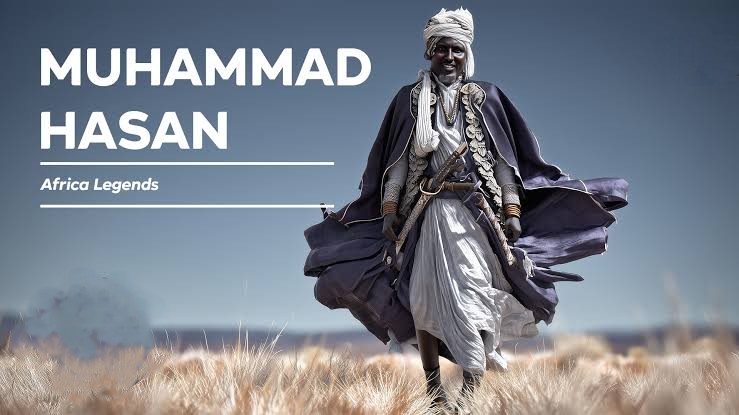
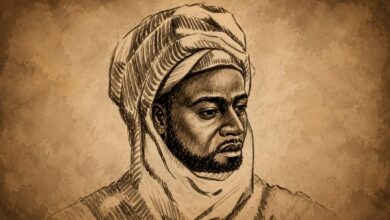
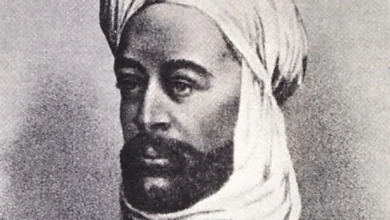
Among the most formidable of the mujāhidūn of East Africa in the modern era stands Sayyid Muḥammad ibn ʿAbdille Ḥasan (1856–1920 CE), known to his people as the Sayyid and to his colonial enemies as the “Mad Mullah.” For more than twenty years he waged a sustained jihād against the British, the Italians, and the expanding Ethiopian empire, establishing a Dervish state that controlled large parts of the Somali Peninsula and refused to bow to Christian colonial domination. He was a ḥāfiẓ of the Qur’ān, a scholar of the Shāfiʿī school, a master of the Ṣāliḥiyya ṭarīqa, a military commander of rare endurance, and one of the greatest poets in the Somali language. His life is a living commentary on the obligation of resistance when the lands of Islam are invaded and the Sharīʿah is threatened with erasure.
Born in 1856 in the region of Buuhoodle (in what later became British Somaliland), Muḥammad ʿAbdille Ḥasan belonged to the Ogaden on his father’s side and the Dulbahante on his mother’s. From an early age he devoted himself to the pursuit of knowledge. He memorised the Qur’ān, studied the traditional Islamic sciences, and travelled widely in search of further learning, including journeys to the Ḥijāz where he performed the Ḥajj and was exposed to the reformist currents of the time.
Upon his return he affiliated with the Ṣāliḥiyya order, a branch of the Aḥmadiyya-Idrīsiyya tradition that emphasised strict adherence to the Sunnah and rejection of innovations. He began calling the people to purification of belief and practice, mediating clan disputes over water and grazing rights, and gathering around him a growing body of disciples whom he named the Dervishes (Darāwīsh).
By 1899 the Sayyid had transformed this religious following into a disciplined movement of resistance. He declared jihād against the Christian powers that had partitioned the Somali lands: the British in the north, the Italians in the south and east, and the Ethiopians who were advancing into the Ogaden. His letters and poems made the nature of the struggle unmistakable.
He wrote to the British:
“I have no fort to protect me, nor have I any country to defend. I have no soldiers except those who follow me for the sake of Allāh… I desire war, but you do not.”
In another message he warned them that he would fight until the land was cleansed of their presence. His poetry, composed in the rich oral tradition of the Somali people, became a weapon sharper than the spear.
Poems such as “Maqashiiya uunka” and others served as nasīhah, political mobilisation, and scathing satire against collaborators and colonial agents. In a society where the spoken word carried immense authority, the Sayyid’s verse united clans that had long been divided and fixed the struggle in the memory of the people.
The Dervish state that he established was organised along the lines of a militant ṭarīqa. It possessed a clear hierarchy, mobile armies that moved with extraordinary speed across the arid terrain, and fortified centres, the most famous of which was Taleḥ (Taleex), with its stone forts that still stand as silent witnesses. Between 1901 and 1904 the British launched four major expeditions against him; all failed to destroy the movement. At the Battle of Dul Madoba in 1913, Dervish forces killed the British commander Richard Corfield, an event that entered Somali oral history as a moment of profound satisfaction. The Sayyid’s fighters endured aerial bombardment in the later stages of the war—among the earliest uses of air power against a Muslim resistance—yet they continued to harass the colonial garrisons and to cross borders into Italian and Ethiopian territory when pressed.
The colonial powers responded with scorched-earth tactics, blockades, and the cultivation of rival Somali factions. Yet for two decades the Sayyid refused every offer of pardon or compromise that would have required submission.
Only in December 1920, after sustained British aerial and ground campaigns had reduced his strongholds, did the military phase of the struggle come to an end. The Sayyid himself withdrew into the Ogaden and died there on 21 December 1920, reportedly of influenza. He was sixty-four years old.
The Dervish movement did not achieve permanent territorial independence, but it had inflicted upon three imperial powers a costly and humiliating resistance that delayed full colonial consolidation and left an indelible mark on Somali national consciousness.
The historical record of the Sayyid is preserved in multiple sources: his own letters and poetic corpus, which continue to be recited and studied; British official reports and military despatches that, even in their hostility, testify to his tenacity and organisational skill; Italian and Ethiopian accounts; and the rich Somali oral tradition that has kept his memory alive. Modern scholarship, including works such as Said S. Samatar’s studies of his poetry and the broader historiography of the Dervish movement, has confirmed the scale of his achievement. He is remembered not merely as a guerrilla leader but as a scholar who placed the Sharīʿah and the unity of the Muslims above clan loyalty, and as a poet whose words outlived the forts of Taleḥ.
The lessons of his life are many and severe. First, the defence of Muslim lands is an obligation that does not wait upon perfect unity or superior weaponry; the Sayyid began with limited resources and forged a movement that held three empires at bay for a generation.
Second, the pen and the tongue are instruments of jihād no less than the rifle; his poetry did what proclamations and treaties could not—it shaped the conscience of a people.
Third, true resistance requires the willingness to endure isolation, hardship, and the accusation of madness from those who prefer accommodation with the occupier.
Fourth, the scholar who combines ʿilm with action becomes a focal point around which the dispersed forces of the Ummah may gather.
In our own time, when the lands of Islam continue to face occupation, fragmentation, and cultural assault, the example of Sayyid Muḥammad ʿAbdille Ḥasan remains a living summons. The Ummah is in need of men who memorise the Qur’ān and then live by its demand for dignity; who master the sciences of the Dīn and then apply them to the defence of the community; who speak truth in verse and in battle; and who prefer death in the path of Allāh to a life of humiliation under the banners of the disbelievers.
The forts of Taleḥ may lie in ruins, but the poetry of the Sayyid still rides the wind of the Somali Peninsula, and the memory of his long jihād continues to instruct those who have eyes to see and hearts to understand.
May Allāh have mercy upon Sayyid Muḥammad ʿAbdille Ḥasan, accept his long striving, his poetry, and his blood, and raise him among the martyrs and the truthful. May He grant this Ummah in every age leaders of his courage, his learning, and his uncompromising attachment to the Dīn.
Bārakallāhu fīkum.