The Repeated Assault on Afghanistan: Britain, Russia, and America
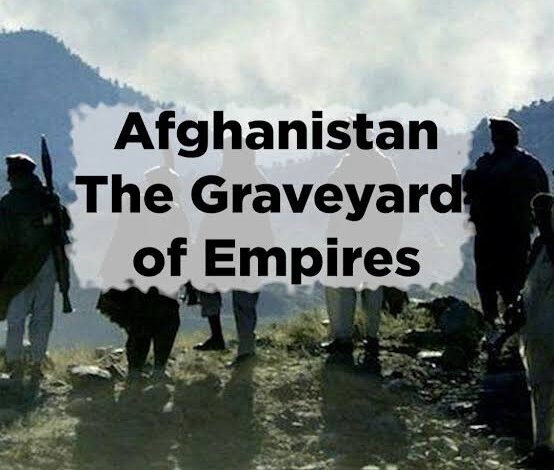
Afghanistan has long stood as a frontier of the Muslim world, a land where the Sharī‘ah, tribal honour, and the independence of the believers intertwined. Successive powers — British, Russian, and American — entered it not merely to secure strategic interests but to reshape its character. Each in turn sought to substitute Muslim norms with foreign models, to weaken the authority of religion in public life, and to orient Afghan society toward the civilisation of the invader. The methods differed — gunpowder and puppet kings under the British, Marxist secularisation under the Soviets, liberal nation-building under the Americans — yet the pattern remained: military domination accompanied by cultural engineering, and a trail of mass death, displacement, and ruined institutions.
The British opened the modern chapter with the First Anglo-Afghan War (1839–1842). Seeking a compliant buffer against Russian influence, they invaded, deposed Dōst Muḥammad, and installed Shāh Shujā‘. The occupation provoked widespread resistance rooted in both tribal independence and Muslim ‘Aqīdah of the superiority of Islām. When the British garrison in Kabul was forced to retreat in January 1842, some 16,000 soldiers and camp followers set out for Jalalabad; almost all perished in the mountain passes from ambush, cold, and starvation. Only a handful survived. The subsequent Army of Retribution returned to burn the great Char Chatta bazaar of Kabul, one of the architectural glories of Central Asia, and committed acts of collective punishment that Afghan memory has never forgotten.
Later wars in 1878–1880 and 1919 reinforced the same lesson: Afghanistan could be temporarily occupied and its rulers manipulated, but attempts to impose lasting foreign direction met fierce rejection. British policy aimed less at full annexation than at controlling Afghan foreign relations and preventing any independent Muslim polity from aligning against imperial interests.
The Soviet invasion of December 1979 marked a far more systematic assault on Muslim character. The communist regime that the Soviets sustained had already begun land reforms, literacy campaigns, and measures against traditional practices that many Afghans experienced as an attack on Islam and social order. The Red Army’s entry, the killing of Ḥafīẓullāh Amīn, and the installation of Babrak Kārmāl turned local resistance into a nationwide jihad. Over the next decade, Soviet and Afghan government forces employed scorched-earth tactics, indiscriminate bombing of villages, and widespread detention and torture. Estimates of Afghan deaths range from several hundred thousand to as high as 1.5 million; millions more became refugees in Pakistan and Iran or were internally displaced. The countryside was devastated, agricultural systems collapsed, and an entire generation grew up amid ruins. Ideologically, the project sought to replace Muslim and tribal authority with Marxist-Leninist structures. Masājid and ‘Ulamā were targeted when suspected of opposition; secular education and women’s emancipation on communist terms were promoted. Although the Soviets later moderated their rhetoric and even instrumentalised Shar’ī language under Najībullāh, the core ambition remained the transformation of Afghan society away from its Muslim foundations. The war failed militarily and politically, yet it left the country shattered and primed for further conflict.
The American-led intervention that began in October 2001, following the attacks of 11 September, claiming to target the Mujāhidūn of al-Qā‘idah and the Ṭālibān regime that sheltered them inly. Within months the Ṭālibān had withdrawn from the major cities in order to minimise casualties of the people and to wage a prolonged guerrilla war. What followed, however, was a two-decade project of nation-building that sought to remake Afghanistan in a Western liberal image. A centralised constitutional order, elections, a free-market economy, expanded rights for women modelled on Western norms, and a secularising legal framework were promoted with massive financial and military backing by the Americans. Billions were spent on reconstruction, education, and security forces. Yet the enterprise rested on the assumption that Afghan society could be rapidly reoriented away from its Sharī’ah and tribal character toward the values of its occupiers – the American Kuffār. Critics within the American system itself later acknowledged that the mission underestimated the depth of local religious and cultural commitments and imposed distinctions between the religious and the secular that many Afghans did not accept.
The human cost was enormous. Direct war deaths included tens of thousands of Afghan civilians, tens of thousands of Afghan soldiers and police, and thousands of American and allied troops. Indirect deaths from disease, displacement, and the collapse of services pushed the total far higher. Night raids, airstrikes, and the conduct of local militias generated lasting grievances. Corruption flourished under the flood of foreign money. When the United States withdrew in 2021 under the pressure of military fatigue, the unending pressure of the Mujāhidūn and the economic bleeding that characterised the 20 years they’d spent, the Afghan government and army it had built collapsed with startling speed, and the Ṭālibān Mujāhidūn returned to full power. Twenty years of Westernisation efforts proved unable to uproot the deeper structures of Afghan Muslim society.
From the British attempt to install compliant rulers and burn the symbols of Afghan urban life, through the Soviet effort to impose a godless modernisation by force, to the American project of liberal nation-building, the foreign interventions shared a common thread: the conviction that Afghan Muslim character was an obstacle to be overcome. Each left behind mountains of dead, ruined villages and cities, mass exile, and a society more fractured than before. The Sharī‘ah and the independent spirit of the people were never fully extinguished; they reasserted themselves when the invaders’ will and resources waned. The record stands as a warning written in blood across three centuries: attempts to substitute the moral and political order of the Muslims of Afghanistan with the civilisation of the outsider have brought only destruction.
And today, the Muslim Ummah of Afghanistan will rise again under the guidance and leadership of the Talibān Mujāhidūn whose focus is on the establishment of the Sharī’ah of Allāh where justice and peace are its cornerstones…
Remind the Ummah of this history.
Bārakallāhu Fīkum