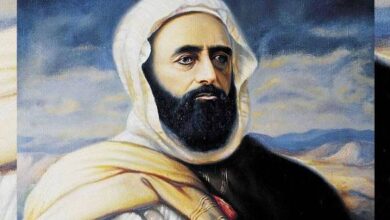
When Imams Stood Up To Tyranny| Imām Ahmad Bn Hanbal

The uncreated Speech of Allāh, the Mighty and Majestic, is one of the foundational beliefs of Ahlus-Sunnah wal-Jamā’ah. Yet in the Abbasid era under Caliph al-Ma’mūn and those who followed him, the Mu’tazilī doctrine of the created Qur’ān was imposed as state creed. Judges, officials, and scholars were summoned, tested, coerced, imprisoned, and in some cases punished severely if they refused to affirm this innovation. This dark chapter, known as the Mihna, tested the hearts of the Ummah’s scholars for over a decade, but Allāh preserved a remnant who refused to bow to tyranny.
Among the four Imams who stood firm in the face of this oppression were Abū ‘Abdillah Ahmad bn Hanbal, Ahmad bn Nasr Al-Khuzā’ī, Muhammad bn Nūh bn Maymūn, and Nu’aym bn Hammād – rahimahumullāh.
As for Abū ‘Abdillah Ahmad bn Muhammad bn Hanbal ash-Shaybānī, he was born in Baghdād in the year 164 after the Hijrah. He grew up seeking knowledge from a young age, traveling extensively in pursuit of hadith across the lands. He became a towering Hāfidh, a Faqīh, and the Imām of Ahlus-Sunnah in his time. Adh-Dhahabī and others praised him as the leader of the Sunnah, the proof of the religion, and the one through whom Allāh strengthened the Ummah during its greatest trial of that era.
His teachers included the likes of Hushaym, Sufyān bn ‘Uyaynah, Muhammad bn Idrīs Ash-Shāfi’ī, and many other giants. His students were numerous and included Abū Dāwūd, al-Bukhārī, Muslim, and other luminaries who carried the Sunnah forward. He compiled the Musnad, a vast collection of hadith arranged by narrator, which remains a cornerstone of our heritage.
Before the Mihna, Imām Ahmad was known for his piety, asceticism, and deep attachment to the Sunnah. He lived simply, often earning through manual work, and avoided the rulers and their circles. When the fitnah of the created Qur’ān erupted, he was among the very few who refused to yield despite immense pressure.
The trials he faced were severe and prolonged. He was arrested, chained, and brought before the authorities multiple times. Under al-Mu’tasim, he endured a brutal flogging that left his body battered and bloodied. He was beaten with whips until he lost consciousness, yet upon regaining his senses, he reaffirmed his position that the Qur’ān is the uncreated Speech of Allāh.
Imprisonment, isolation, and constant interrogation tested him for years, but he remained patient, seeking only the pleasure of Allāh. His steadfastness inspired many who had wavered to return to the truth, and it became a symbol of resistance against state-sponsored bid’ah.
Even in the depths of his suffering, Imām Ahmad showed remarkable forbearance. He refused offers of compromise that would have eased his pain, stating that he could not say with his tongue what he did not believe in his heart. His body bore the scars of the whips, yet his resolve only grew stronger.
Allāh eventually granted victory to the Sunnah, and when al-Mutawakkil ended the Mihna, the Imām was released and honored by the people. Historical accounts, particularly from his son Sālih and narrators like Hanbal ibn Ishāq, describe that the brutal flogging under Caliph al-Mu‘tasim left deep, lasting scars. He was whipped extensively (reports mention dozens of lashes, with some details up to severe repeated beatings), to the point of losing consciousness multiple times. The wounds were so grave that a specialist had to cut away hanging or torn flesh with tools, and Imām Ahmad bore this with patience, only praising Allāh.
After recovery from the immediate injuries, the marks of the lashing remained clearly visible on his back until the day he died. He continued to feel pain in various parts of his body for the rest of his life as a result of the ordeal. Despite this, he persisted in teaching, attending Jumu‘ah and congregational prayers, issuing fatāwā, and narrating hadith.
His endurance did not prevent him from fulfilling his scholarly role, but the physical toll was evident and chronic.
He passed away in 241 AH, leaving behind a legacy that continues to illumine the path for seekers of truth.
Shaykh al-Islām Ibn Taymiyyah – rahimahullāh – spoke of Imām Ahmad’s pivotal role:
_“Truly, Allāh granted victory to this Dīn through two men, to whom there is no third: Abu Bakr during the Ridda Wars, and Ahmad ibn Hanbal during the Mihna.”
In every age, when falsehood is elevated and truth is attacked, Allāh raises men who embody firmness upon the Dīn. The example of these Imams teaches us that worldly power, whips, and chains cannot prevail over a heart anchored in Tawhīd and conviction. The Ulamā are the inheritors of the Prophets, and their greatest inheritance is to speak the truth in the face of tyranny, even if it costs them everything in this world.
May Allāh have mercy upon Imām Ahmad and his companions in steadfastness, and grant us a portion of their courage in our own times of trial. Āmīn.
Bārakallāhu Fīkum