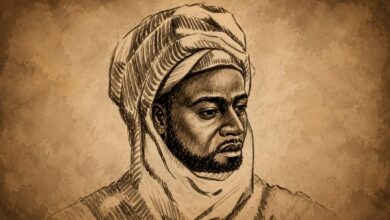
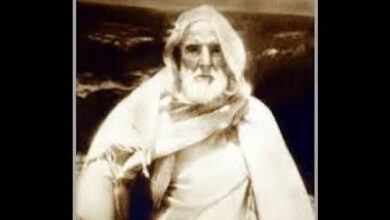
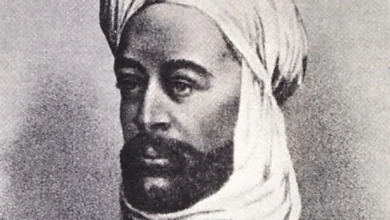
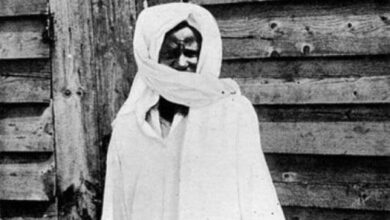
Imām Māʾ al-ʿAynayn: The Lion of the Sahara and the Scholar of Resistance
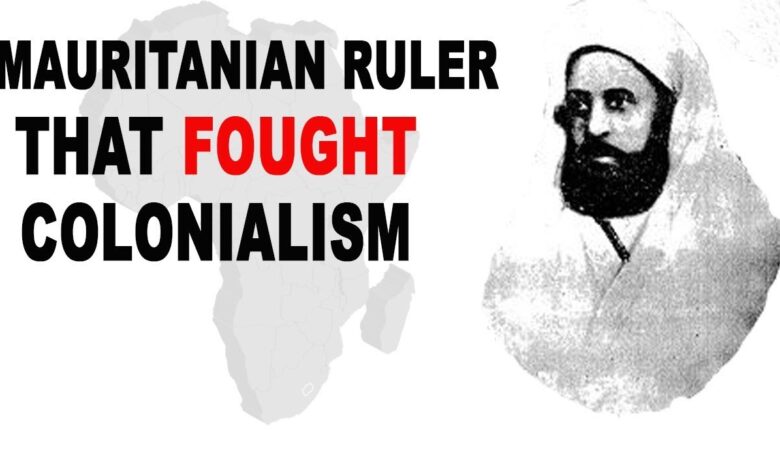
In the closing decades of the thirteenth century after the Hijrah and the opening of the fourteenth, as the French and Spanish colonial powers tightened their grip upon the western Sahara and the lands of the Maghrib, Allāh raised a scholar whose life united deep learning, prolific authorship, spiritual authority, and armed resistance. Imām Muḥammad al-Muṣṭafā Māʾ al-ʿAynayn ibn Muḥammad Fāḍil ibn Maʾmīn al-Qalqamī (c. 1830/1831–1910 CE), known throughout the Sahara and the Maghrib simply as Māʾ al-ʿAynayn (“Water of the Two Eyes”), stands as one of the last great scholar-warriors of the pre-modern Saharan world. His resistance was not the isolated struggle of a tribal chieftain, but the deliberate project of a mujaddid who sought to defend the lands of Islam through knowledge, unity, and the sword.
Born near Walāta in the Ḥawḍ region (present-day southeastern Mauritania) into a family of established scholarly and sharīfī standing, Māʾ al-ʿAynayn was the son of the renowned Qādirī shaykh Muḥammad Fāḍil. He grew up in the nomadic scholarly environment of the western Sahara, mastering the Qur’ān, the Mālikī fiqh, Arabic sciences, and the spiritual path. In 1858 he performed the Ḥajj, travelling by the new steamships that were already reshaping the Muslim world. The journey exposed him to the wider Ummah and to the growing European threat. Upon his return he strengthened ties with the ʿAlawite sultans of Morocco, visiting the court and establishing a relationship that would later prove crucial to his political and military efforts. He founded zawāyā and gathered disciples across the Sahara, eventually developing his own spiritual orientation while remaining rooted in the broader Qādirī and Fāḍiliyya traditions of his father.
Māʾ al-ʿAynayn was extraordinarily prolific. Biographers attribute to him between one hundred and over three hundred works in both poetry and prose, covering jurisprudence, Sufism, grammar, theology, and practical guidance for the spiritual path. His writings were among the most frequently printed on the lithographic press of Fez; at one point they constituted a significant portion of its output.
Among his notable contributions is the fatwa Hidāyat man ḥārā fī amr al-Naṣārā (“Guidance for Whoever is Confused Concerning the Affair of the Christians”), in which he clarified the obligation of defensive jihād against European encroachment and addressed the legal status of collaboration with the occupiers. He also composed poetry that emphasised Muslim unity above tribal or ṭarīqa divisions, most famously declaring his brotherhood with all the paths.
His literary production was itself a form of resistance: it reinforced Islamic identity, provided legal and spiritual justification for struggle, and circulated widely among the tribes and the ʿulamāʾ of the Maghrib.
The most enduring material monument of his Jihād was the founding of Smara (al-Samāra) in the Sāqiya al-Ḥamrāʾ, beginning around 1898–1900. What had been little more than a water-point and caravan junction was transformed into a fortified ribāṭ and scholarly centre. Smara became a self-sufficient settlement that, at its height, is said to have supported thousands of inhabitants, students, and fighters. From this desert stronghold Māʾ al-ʿAynayn coordinated resistance against both French advances from the south and east and Spanish presence along the coast. He prohibited the approach of Europeans under severe penalty and sought to gather the fractious Saharan tribes under the single banner of Islam.
In 1904 he openly proclaimed jihād. His followers conducted raids, and his network is widely believed to have been connected to the assassination in 1905 of Xavier Coppolani, the French architect of the conquest of Mauritania—an event that delayed the fall of the Adrar for several years.
The climax of his Jihād came in 1910. As the Moroccan sultanate weakened under European pressure and Sultan ʿAbd al-Ḥafīẓ appeared increasingly compromised, Māʾ al-ʿAynayn judged that the defence of the Dīn required decisive action. At the head of an army reported at around six thousand men, drawn from Saharan and southern Moroccan tribes, he moved north from the region of Tiznit with the intention of confronting the sultan and preventing the final collapse of Muslim authority. On 23 June 1910 his forces were met and defeated by a French column under General Moinier in the Tadla plain (near Sidi Salah). The defeat shattered the immediate campaign. Māʾ al-ʿAynayn withdrew to Tiznit, where he died a few months later, on 23 October 1910 (or shortly thereafter according to some accounts). His son Aḥmad al-Hiba continued the struggle, briefly occupying Marrakesh in 1912 before losing the city to the French forces.
The historical record of Māʾ al-ʿAynayn rests upon multiple sources: his own extensive writings and fatwas; the biographical notices of Maghribī scholars such as Muḥammad ibn Jaʿfar al-Kattānī; the chronicles of his disciples; French military and colonial reports that, even when hostile, acknowledge the scale of the threat he posed; and later Arabic and European studies that have begun to recover his literary corpus. The founding of Smara, the proclamation of jihād in 1904, the disruption of French plans in Mauritania, and the final northern campaign of 1910 form the central military narrative. Yet equally important is the intellectual record: a scholar who used the printing press, poetry, and legal opinion to forge a pan-tribal, pan-Islamic consciousness in a region long marked by fragmentation.
The lessons of his life are sharp and enduring. First, knowledge and authorship are themselves instruments of resistance; Māʾ al-ʿAynayn fought with the pen as deliberately as with the sword. Second, the defence of Muslim lands requires the transcendence of tribal and ṭarīqa divisions in favour of a broader Muslim solidarity. Third, the scholar who remains in the desert or the periphery can still shape the politics of the centre, as his relationship with successive Moroccan sultans demonstrates. Fourth, even defeat in battle does not nullify the moral and spiritual victory of those who refuse to surrender the Dīn to colonial domination. The city he founded, based primarily on the fundamentals of the Dīn became a bastion of Mujāhidūn and a citadel of ‘ilm, and where great men were made. His resistance delayed conquest, preserved a memory of defiance, and left a body of writing that continued to circulate long after Smara itself was later destroyed by the French.
In an age when the Sahara and the wider Muslim world again face external pressures and internal fragmentation, the example of Māʾ al-ʿAynayn remains instructive. He combined the rigor of the ʿālim, the charisma of the Sufi shaykh, and the resolve of the mujāhid. He built institutions of learning and fortification in the heart of the desert. He called the tribes to unity under the Sharīʿah rather than under the banner of any single lineage. And when the moment demanded it, he led men into battle against superior European forces rather than acquiesce in the dismemberment of the lands of Islam.
May Allāh have mercy upon Imām Māʾ al-ʿAynayn, accept his long striving, his writings, and his jihād, and raise his rank among the scholars and warriors who stood firm when the banners of the cross advanced upon the Ummah. May He grant the Muslims of every generation men of his learning, his independence of spirit, and his refusal to trade the Dīn for safety under occupation.
Bārakallāhu fīkum.