Shaykh Muḥammad ibn ʿAlī al-Sanūsī: The Lover of Islam and the Architect of Desert Renewal
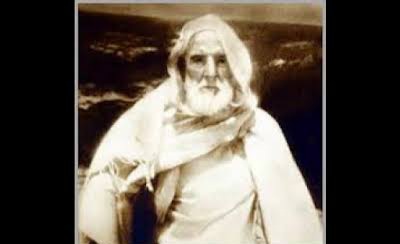
Among the most consequential figures of Tajdīd renewal in nineteenth-century North Africa stands Shaykh Muḥammad ibn ʿAlī al-Sanūsī al-Khaṭṭābī al-Ḥasanī al-Idrīsī (1202–1276 AH / 1787–1859 CE), the founder of the Sanūsiyya order. Born near Mostaganem in western Algeria into a family that claimed sharīfī descent from the Prophet ﷺ through al-Ḥasan ibn ʿAlī, he grew up in an age when the Muslim lands of the Maghrib were already feeling the first pressures of European expansion and the internal weaknesses of the Ottoman system. From his youth he was marked by an intense love for the Dīn, a restless pursuit of knowledge, and a conviction that the Ummah required both spiritual purification and practical organisation if it was to withstand the coming storms.
He studied first in his native region, then at the great Qarawiyyīn in Fez, where he immersed himself in the Mālikī fiqh, ḥadīth, tafsīr, and the classical sciences. His thirst for knowledge carried him eastward to Cairo and the Azhar, and then to the Ḥijāz. There he attached himself to the circle of the Moroccan reformer Sayyid Aḥmad ibn Idrīs al-Fāsī, whose emphasis on returning to the Qur’ān and the Sunnah, combined with a sober form of spiritual discipline, left a lasting imprint upon him. After the death of Ibn Idrīs in 1837, al-Sanūsī established his own path, which came to be known as the Sanūsiyya or the Ṭarīqa Muḥammadiyya. He founded his first zāwiya near Makkah, but political pressures and his own sense of mission soon directed his gaze westward.
In 1841–1843 he transferred the centre of his activity to Cyrenaica (Barqa) in what is now eastern Libya. There, among the Bedouin tribes of the Green Mountain and the surrounding deserts, he found a population whose Islam had become mixed with tribal custom and whose social life was marked by inter-clan conflict and vulnerability to external powers.
Al-Sanūsī did not come as a conqueror or for leadership reasons. He came as a teacher and organiser. He established a network of zawāyā — lodges that functioned simultaneously as centres of Qur’ānī education, arbitration of disputes, agricultural improvement, and the training of a disciplined following.
These zawāyā were deliberately placed along the major caravan routes linking North Africa to the Ḥijāz and to sub-Saharan Africa, allowing the order to combine daʿwah with the protection and facilitation of trade.
His approach to the tribes was marked by pragmatism and accommodation. He respected existing patterns of authority while gradually introducing a higher standard of sticking to the Sunnah.
He emphasised the study of the Qur’ān and ḥadīth, the performance of the obligatory acts of ‘Ibādah, and a form of dhikr that was sober rather than ecstatic. In this he stood within the broader reformist current of the period that sought to strip away excesses while retaining a framework of spiritual discipline.
It must be said, with mildness and without harshness, that his continued reliance upon the structures and terminology of the Sufi ṭarīqa — however purified — represented a continuation of the Sūfī system. But in his time, it was the Ahlussunnāh that later generations of strict adherents to the pure Sunnah would regard as containing residual elements of innovation. Yet his intention was clearly the revival of the Dīn, the education of the masses, and the creation of a cohesive Muslim community capable of resisting external domination. His love for Islam was not theoretical; it expressed itself in the patient, decade-after-decade labour of building institutions in one of the harshest environments on earth.
By the time of his death in 1859 at Jaghbūb — the remote oasis he had chosen as the new centre of the order, safely distant from Ottoman and Egyptian interference — the Sanūsiyya had become the most organised and widely respected Muslim force in the eastern Sahara.
He left behind a corpus of writings on fiqh, the principles of ijtihād, the spiritual path, and the obligations of the believer. More importantly, he left a living network of zawāyā, trained teachers, and a collective identity that bound together tribes that had previously been fragmented.
The true measure of his achievement became apparent only after his death. Under his son Muḥammad al-Mahdī and later under his grandson Aḥmad al-Sharīf, the Sanūsiyya continued to expand and to serve as a focus of Muslim solidarity.
When the Italian invasion of Libya began in 1911, it was the organisational and spiritual infrastructure created by Muḥammad ibn ʿAlī al-Sanūsī that provided the backbone of the resistance. The most famous of the mujāhidīn who fought under that banner was Imām ʿUmar al-Mukhtār, the Lion of the Desert. ʿUmar al-Mukhtār was himself a product of the Sanūsī educational system; he had studied in its zawāyā, absorbed its discipline, and drawn upon its networks of loyalty and supply. The long guerrilla war he waged against the Italians from 1923 until his martyrdom in 1931 was, in a very real sense, the flowering of the seed planted by al-Sanūsī three-quarters of a century earlier. Without the prior work of daʿwah, education, and social organisation carried out by the founder, the later jihād would have lacked both its cadre and its cohesion.
The historical record of Shaykh Muḥammad ibn ʿAlī al-Sanūsī rests upon his own writings, the biographical notices of his disciples, the observations of European travellers and colonial officers who recognised the order’s power, and the modern scholarly studies that have examined the Sanūsiyya as both a religious and a socio-political phenomenon. The establishment of the first Cyrenaican zāwiya in the early 1840s, the transfer of the centre to Jaghbūb in 1856, and the steady expansion of the network across the desert constitute the central narrative of his organisational achievement.
The lessons of his life remain instructive. First, lasting resistance to external domination requires long preparation through education and the building of independent Muslim institutions. Al-Sanūsī did not live to see the Italian occupation, yet the structures he created made prolonged jihād possible two generations later.
Second, daʿwah among the Bedouin and the people of the periphery demands patience, respect for local realities, and a willingness to begin with the fundamentals of the Dīn rather than with abstract disputes.
Third, the love of Islam expresses itself not only in personal piety but in the concrete work of organising communities, settling disputes, teaching the Qur’ān, and preparing the next generation for the trials that may come.
Fourth, even those whose methods retain elements that stricter voices may criticise can, by the sincerity of their intention and the scale of their effort, leave a legacy that later, more rigorous generations can build upon and purify.
In an age when the Ummah continues to face fragmentation, cultural pressure, and the erosion of its independent institutions, the example of Shaykh Muḥammad ibn ʿAlī al-Sanūsī calls us to the long labour of renewal. He loved Islam enough to leave the centres of learning and settle in the desert; to build zawāyā instead of seeking palace patronage; to educate the tribes rather than merely condemn their shortcomings; and to create a network that would, long after his death, produce men like ʿUmar al-Mukhtār. May Allāh accept from him his striving, his teaching, and the institutions he established for the sake of the Dīn.
May Allāh have mercy upon Shaykh Muḥammad ibn ʿAlī al-Sanūsī, raise his rank among the renewers and the sincere, and grant this Ummah in every generation men who combine knowledge with organisation, love of the Dīn with practical labour, and spiritual discipline with preparation for the defence of the lands of Islam.
Bārakallāhu fīkum.