The Daʿwah and Tajdīd of Shaykh ʿUthmān ibn Fūdī: The Formative Years
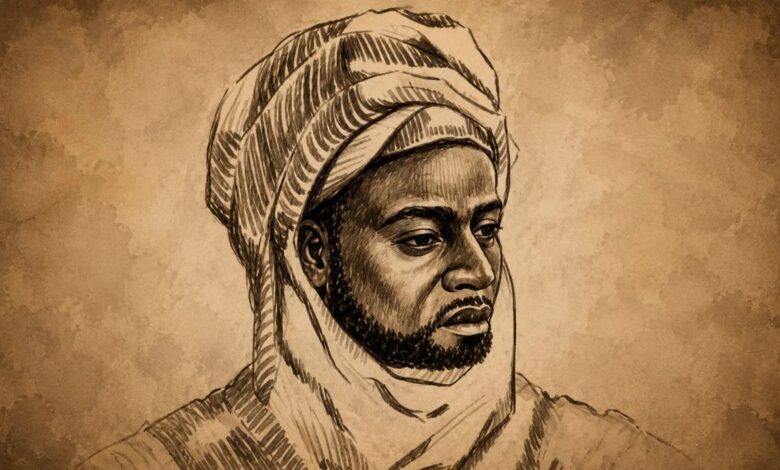
Among the greatest projects of tajdīd in the history of the western lands of the Sudan is the movement raised by Shaykh ʿUthmān ibn Muḥammad ibn ʿUthmān ibn Ṣāliḥ, known as ʿUthmān ibn Fūdī (1158–1232 AH). Together with his brother ʿAbdullāh and his son Muḥammad Bello, he transformed a region in which the Sharīʿah had been diluted by custom, injustice, and the rule of those who claimed the Dīn while governing by other than what Allāh had revealed, into a polity ordered by the Book and the Sunnah. What follows is the account of the beginnings of that tajdīd — the years of preparation, teaching, and the formation of a community ready for the obligations that Allāh would place upon it.
Shaykh ʿUthmān was born in Maratta, in the land of Gobir, in the year 1158 AH. His family belonged to the Toronkawa, a lineage of Fulani scholars who had settled in the Hausa states generations earlier. His father, Muḥammad Fodio, was a man of learning, and his mother, Ḥawwāʾ, came from a household likewise grounded in knowledge. From them he received the Qur’ān, the foundations of Arabic, and the first principles of the Mālikī madhhab. He continued his studies with the scholars of Gobir and later travelled to Agadez, where he sat with al-Ḥājj Jibrīl ibn ʿUmar, a teacher known for his firmness upon the Sunnah and his refusal to accommodate the innovations of the age. Under such teachers Shaykh ʿUthmān mastered tafsīr, ḥadīth, the sciences of the Arabic language, and the higher disciplines of fiqh. He took the path of the Qādiriyya, yet his writings show that the Qur’ān and the authentic Sunnah remained the measure by which every practice was judged.
At the age of twenty he began to teach and to call. For more than twenty years he and his younger brother Shaykh ʿAbdullāh moved through Gobir, Kebbi, and Zamfara as teachers of the Dīn. Their method was the method of the early generations: they taught the Book of Allāh, explained the obligations of the Sharīʿah, and called both the common people and the ʿulamāʾ to abandon the innovations that had spread among them. ʿAbdullāh, who had become one of his brother’s foremost students, assisted in the teaching and later recorded the history of those years in Tazyīn al-Waraqāt. The circle of those who sat with them grew steadily. They were not yet a state, but they were already a jamāʿah bound by knowledge and by a shared rejection of the corruption around them.
In these years Shaykh ʿUthmān composed the works that would form the intellectual foundation of the later Caliphate. The greatest of them is Iḥyāʾ al-Sunnah wa Ikhmād al-Bidʿah, in which he sets out the pure Sunnah and extinguishes the innovations that had become common in the Sudan. He identifies the practices that had no basis in the revelation, criticises the scholars who remained silent in the face of injustice, and calls the people to return to the way of the Prophet ﷺ and his companions. In Tanbīh al-Ikhwān ʿalā Aḥwāl al-Sūdān and other treatises he describes the condition of the Hausa rulers: men who imposed taxes not sanctioned by the Sharīʿah, who enslaved free Muslims, who neglected the ḥudūd, and who surrounded themselves with those who preferred the world to the Dīn. These writings were not abstract. They were the diagnosis of a society that had drifted from the path, and they prepared the hearts of those who read them for the duties that would soon be required.
Shaykh ʿUthmān did not confine his Daʿwah to the ordinary people. He addressed the rulers. He visited the court of Bawa of Gobir and obtained certain concessions for the Muslims, including the freedom to teach the Dīn openly. He is also reported to have taught Yunfa, who later became sultan. Yet as the number of his followers increased and as his criticism of injustice grew sharper, the rulers of Gobir began to see in him a threat. By the closing years of the twelfth century and the opening of the thirteenth, the tension was open. Yunfa demanded that the Shaykh disperse his community and cease his public teaching. Shaykh ʿUthmān refused. The jamāʿah had been formed; the knowledge had been planted; the obligation of hijra and of standing for the Sharīʿah was drawing near.
Throughout these decades Shaykh ʿUthmān was consciously preparing men. He taught them the sciences of the Dīn, trained them in the fear of Allāh, and produced a literature that would later serve as the constitution of the state that arose from their struggle. His brother ʿAbdullāh was already a scholar of rank, and his son Muḥammad Bello was being formed in the same discipline. The movement remained a school and a moral community, yet it was already a potential polity ordered by the revelation.
The record of these years is preserved above all in the writings of the Fodiawa themselves — in the early treatises of Shaykh ʿUthmān, in ʿAbdullāh’s Tazyīn al-Waraqāt, and in the later chronicle of Muḥammad Bello, Infāq al-Maysūr. These sources show a consistent picture: a scholar who combined deep knowledge with public courage, who diagnosed the ills of his age with precision, and who spent more than twenty years building the human and intellectual capital without which no lasting tajdīd is possible.
The lesson of these years is plain. Tajdīd does not begin with the sword. It begins with the teaching of the Book and the Sunnah, with the formation of a community that has internalised the demands of the Dīn, and with the patience to wait until Allāh opens the way.
Shaykh ʿUthmān ibn Fūdī taught, wrote, and trained until the jamāʿah was ready and the obligation of resistance had become clear. In a time when many call for change without preparation, his example remains a scale by which such calls are measured.
May Allāh have mercy upon Shaykh ʿUthmān ibn Fūdī, accept the years he spent in Daʿwah, and raise his rank among those who renewed the Dīn. May He grant this Ummah ʿulamāʾ who combine knowledge with steadfastness, and communities willing to be shaped by the revelation before they are called to defend it.
Bārakallāhu fīkum.