The Legacy of the Da’awah of Shaykh Uthmān Dan Fodio
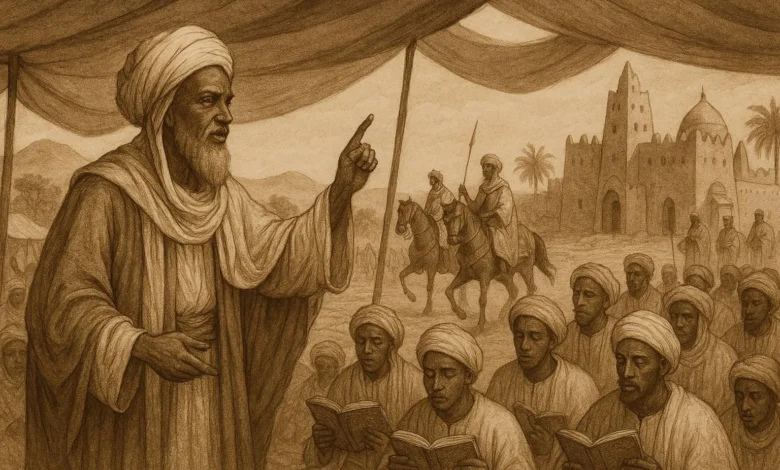
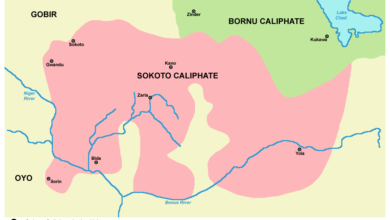
When Shaykh ʿUthmān returned to the mercy of Allāh in 1232 AH, the burden of leadership passed to his son Muḥammad Bello. The jamāʿah that had begun in the lesson-circles of Gobir and had been tested in the hijra and the Jihād now stood as a vast territory ordered by the Sharīʿah. The task before Muḥammad Bello was no longer the overthrow of corrupt rulers but the preservation and deepening of what had been established — the consolidation of authority, the defence of the frontiers, the continued spread of knowledge, and the guarding of the community against the very worldly temptations that victory can bring.
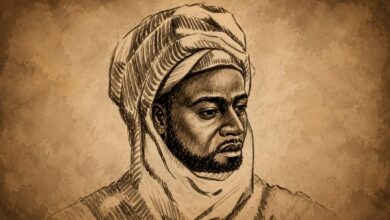
Muḥammad Bello ruled as Amīr al-Muʾminīn from 1232 until his own death in 1253 AH. He faced external threats from the remnants of the old regimes, from neighbouring powers, and from internal ambitions that arose among some of the new emirs. He met these challenges with a combination of firmness and scholarship. His armies secured the borders; his letters and treatises reminded the governors of their duties; and his own example remained that of a ruler who preferred the company of the ʿulamāʾ and the labour of writing to the empty display of power. Under his direction Sokoto became a stable centre to which petitions, students, and travellers made their way from across the Sudan.
The literature of this period reflects the concerns of a mature polity. Muḥammad Bello continued to write on governance, on the virtues required of those in authority, on medicine, and on the spiritual discipline that alone can protect a community after Allāh has granted it success.
He corresponded with scholars beyond the Caliphate and received embassies that recognised the new order. ʿAbdullāh, still ruling in the west from Gwandu, maintained his own court as a place of learning until his death in 1245 AH. The division of responsibilities that Shaykh ʿUthmān had arranged — the west under ʿAbdullāh, the east under Muḥammad Bello — proved durable, and the two centres remained linked by kinship, by shared purpose, and by the authority of the Amīr al-Muʾminīn in Sokoto.
The Caliphate that took shape in these decades was not free of the difficulties that attend every human endeavour. There were disputes among emirs, moments of harshness in the application of power, and the constant need to restrain those who had fought in the Jihād from turning their strength into oppression. Yet the standard against which such failings were measured remained the Sharīʿah and the writings of the founders. The qāḍīs continued to judge by the law of Allāh. The zakāh and the other dues replaced the arbitrary levies of the past. Students still travelled to sit with the scholars. The poetry and the treatises of the Fodiawa were copied and taught, so that the memory of the original call was not lost.
The wider impact of this tajdīd extended beyond the lifetime of its founders. The model of a state ordered by the Sharīʿah, governed by men expected to possess knowledge, and sustained by a continuous production of religious literature influenced later movements across the western and central Sudan. The writings of Shaykh ʿUthmān, ʿAbdullāh, and Muḥammad Bello became part of the curriculum in many centres of learning. Their insistence that power is a trust, that the ruler is accountable to Allāh, and that knowledge must accompany authority remained a reference for those who came after them.
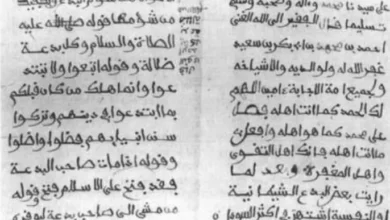
The record of the mature Caliphate is found in the continuing literary output of Muḥammad Bello, in the administrative correspondence that has survived, in the local chronicles of the emirates, and in the testimony of those who visited or studied the state in the generations that followed. These sources show a polity that sought, with varying degrees of success, to remain faithful to the principles upon which it had been founded.
The final lesson of this long journey is that tajdīd is not a single moment of victory but a continuous labour. Shaykh ʿUthmān prepared the community through decades of teaching. The Jihād established the conditions in which the Sharīʿah could be applied. The years of consolidation under Muḥammad Bello tested whether that application could endure. The writings they left behind — Iḥyāʾ al-Sunnah, Bayān Wujūb al-Hijra, Ḍiyāʾ al-Ḥukkām, Infāq al-Maysūr, and the many other treatises — remain the clearest expression of their purpose: to return the people to the Book and the Sunnah, to restrain the hands of the unjust, and to raise a generation that would know its duty to Allāh.
In every age the Ummah stands in need of such a combination — knowledge before action, preparation before confrontation, and the fear of Allāh after victory. The path taken by Shaykh ʿUthmān ibn Fūdī, his brother, and his son is one of the clearest examples in the later centuries of how that combination can transform a region and leave a legacy that outlives its founders.
May Allāh have mercy upon Shaykh ʿUthmān ibn Fūdī, upon ʿAbdullāh ibn Fūdī, and upon Muḥammad Bello. May He accept their Daʿwah, their Jihād, their governance, and the knowledge they spread, and may He grant this Ummah in every generation men who renew the Dīn with the same sincerity, patience, and adherence to the revelation.
Bārakallāhu fīkum.