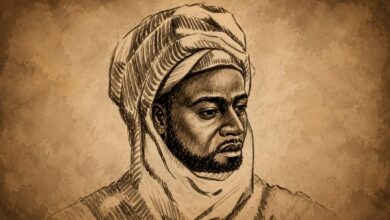
The Tajdīd of Imām Muḥammad Aḥmad al-Mahdī: A Call to the Ummah of Jihād
Beloved Brother!
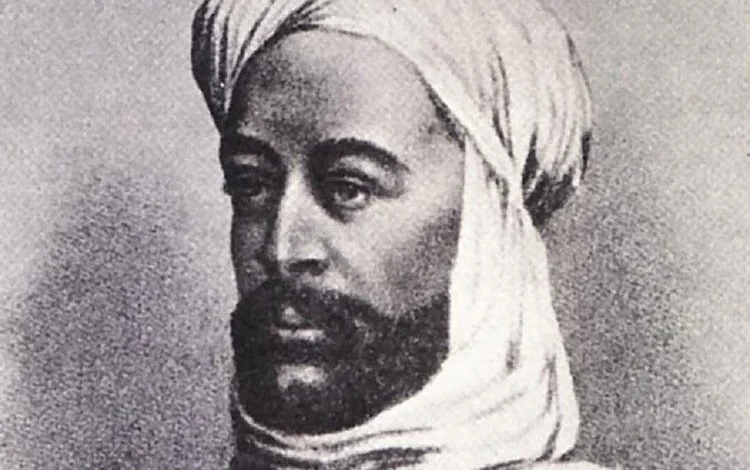
Know that the path of tajdīd is not a path of words alone, nor of seclusion in the corners of mosques while the lands of Islam are violated and the laws of Allāh are replaced by the laws of men. The true mujaddid is the one who combines the purification of the self with the purification of the land, who calls to the Book and the Sunnah with his tongue and enforces them with his hand when the conditions are met. Such was Imām Muḥammad Aḥmad ibn ʿAbd Allāh al-Mahdī (1260–1302 AH / 1844–1885 CE), the renewer of the Sudan, the establisher of a Muslim state upon the pure Sharīʿah, and the leader of a jihād that shook the thrones of the Turco-Egyptian oppressors and their British protectors.
Born on the island of Labab in Dongola province to a family that claimed descent from the Prophet ﷺ through the line of the Anṣār, Muḥammad Aḥmad grew up in Karari near Omdurman. From his youth he was marked by asceticism, intense worship, and a deep attachment to the Qur’ān and the Sunnah. He studied under the scholars of the Sammāniyya ṭarīqa and other teachers in the Gezira and Berber regions, but he was never content with the diluted Islam of his age.
He saw the Turco-Egyptian administration — with its heavy taxation, its corruption, its employment of non-Muslim officials, and its disregard for the ḥudūd of Allāh — as a regime of kufr that had to be uprooted. In his proclamations he declared that the “Turks” (as the Sudanese called their rulers) had left the religion of Islam and that fighting them was an obligation upon every capable Muslim.
In March 1881 he confided to his closest companions the visions in which the Prophet ﷺ had informed him that he was the Expected Mahdī, created from the light of the Prophet’s heart, and charged with filling the earth with justice as it had been filled with tyranny.
On 29 June 1881 (corresponding to 1298 AH) he made his public manifestation (ẓuhūr) on Ābā Island in the White Nile. He wrote letters to the notables of the Sudan announcing:
> “I am the Expected Mahdī, the successor of the Messenger of Allāh. He who follows me is of the party of Allāh, and he who disobeys me is of the party of Satan… Jihād is obligatory upon every Muslim according to his capacity.”
He named those who emigrated to him the Anṣār, in deliberate imitation of the Prophet’s hijra, and he undertook his own hijra from Ābā Island to Jabal Qadīr in the Nuba Mountains, where the first victories of the jihād were won. The early successes against the government forces sent to arrest him confirmed in the eyes of the people that this was no ordinary rebel, but a man aided by Allāh.
The writings of the Mahdī form one of the most important bodies of primary sources for the study of modern Islamic renewal. His letters of warning (indhārāt), proclamations (manshūrāt), and legal rulings (aḥkām) number more than a thousand. They have been collected and edited by the Sudanese scholar Muḥammad Ibrāhīm Abū Salīm in al-Āthār al-Kāmila li-l-Imām al-Mahdī (The Complete Works of the Imām al-Mahdī). In these texts he abrogated the authority of the traditional madhāhib when they conflicted with what he regarded as the pure practice of the Prophet and the first generations, abolished certain taxes not sanctioned by the Sharīʿah, regulated the distribution of ghanīma, and insisted upon the equality of all believers under the law of Allāh. He wrote:
> “My call is to revive the Sunnah and to remove the innovations that have corrupted the Dīn. This is by the command of the Prophet ﷺ, who informed me in multiple visions in the presence of the awliyāʾ that I am the Mahdī.”
The jihād he led was not a tribal uprising nor a mere political revolt. It was a comprehensive tajdīd that sought to restore the sovereignty of the Sharīʿah over every aspect of life. After the annihilation of the Egyptian army under Hicks Pasha at Shaykān in November 1883, and the subsequent fall of El Obeid, the road to Khartoum lay open.
On 26 January 1885 the Mahdist forces entered Khartoum; the British governor Charles Gordon was killed. The Mahdī established his capital at Omdurman, across the river, deliberately avoiding the corrupt associations of the old colonial city. For a brief period the Sudan was ruled as a state under the pure law of Allāh, free from the Turco-Egyptian yoke and the creeping influence of European powers.
O Muslims of today! Reflect upon this. The Mahdī did not say that the jihād of the nafs is greater than the jihād bi-l-nafs and then sit in comfort while the land was occupied. He purified his own soul through hunger, night prayer, and detachment from the world, and then he purified the land through the sword when the sword became an obligation. The one who claims that the greater jihād cancels the lesser has invented a religion other than the dīn of the Rasūl ﷺ who fought at Badr, Uḥud, and al-Khandaq; the Companions conquered the empires of Kisra and Caesar; and the Mahdī of the Sudan followed their path. Jihād bi-l-nafs — the striving with one’s person, wealth, and life in the path of Allāh — is among the highest of deeds when its conditions are present. To abandon it while claiming superiority in the jihād of the heart is a form of self-deception that has weakened this Ummah for too long.
The Mahdiyya state did not long survive its founder. Muḥammad Aḥmad died on 22 June 1885, only five months after the fall of Khartoum. His successor, the Khalīfa ʿAbdullāhi, continued the state until it was destroyed by the British under Kitchener at Karari (Omdurman) in 1898. Yet the memory of the Mahdī’s tajdīd endured. His writings continued to be copied and studied; his Anṣār preserved a distinct identity; and later generations of Sudanese Muslims drew upon his example when they sought to resist foreign domination and to return to the Sharīʿah.
The lesson for us is clear. Tajdīd is not a soft word for gradual reform under the permission of the taghut. True tajdīd is the restoration of the Dīn in belief, in law, and in political authority. It requires scholars who fear none but Allāh, leaders who prefer the temporary hardships of jihād to the permanent humiliation of submission, and a community willing to emigrate from the lands of compromise to the lands of sincerity when emigration becomes necessary. The Mahdī began with a handful of companions on an island in the Nile; within four years he had destroyed an empire’s army and established the rule of Allāh over a vast territory. What then is our excuse?
The earth is still filled with oppression. The laws of Allāh are still replaced by the laws of the disbelievers and the hypocrites. The call of the Mahdī still echoes: return to the Book and the Sunnah, make hijra from the stations of humiliation, and establish the jihād in the path of Allāh with full sincerity. Do not let the scholars of the dollars and the rulers of the police stations turn you away from the path of the Prophets and the renewers. The victory of Allāh is near to those who aid His cause.
May Allāh have mercy upon Imām Muḥammad Aḥmad al-Mahdī, accept his tajdīd and his jihād, and raise him among the truthful and the martyrs. May He grant this Ummah in our time men who walk in his footsteps — purifying themselves and purifying the land, speaking the truth and enforcing it, until the earth is filled with justice as it has been filled with tyranny.
Bārakallāhu fīkum.