The Tajdīd of Shaykh Aḥmad Lobbo of Māsina
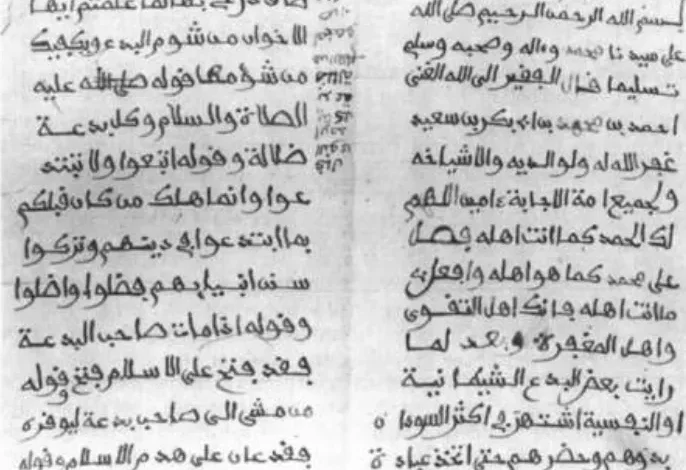
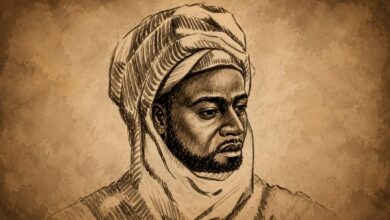
Among the significant projects of tajdīd that arose in the western Sudan in the early thirteenth century after the Hijrah is the movement led by Shaykh Aḥmad ibn Muḥammad Lobbo, known as Seku Aḥmadu or Aḥmadu Lobbo (c. 1190–1261 AH / 1776–1845 CE). In the Inner Niger Delta, a region long marked by the mixing of the Dīn with local custom, the dominance of Bambara rulers who did not judge by the Sharīʿah, and the accommodation of many local Fulani chiefs to that order, he raised a call to return to the Book and the Sunnah. Through Daʿwah, organisation, and Jihād he established the Dīna of Ḥamdallāhi, a polity that sought to order the affairs of the Muslims according to the revelation and to restrain the hand of injustice.
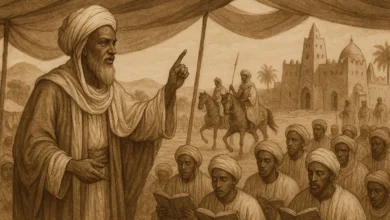
Shaykh Aḥmad Lobbo was born around 1776 among the Fulani of Māsina. He was raised in a household of modest scholarly and pastoral background and received his early instruction in the Qur’ān and the religious sciences from the teachers of his region. He spent time near Jenne, where he taught and gathered students. His preaching criticised the corruption of the local authorities, the uncanonical practices that had spread among both the rulers and some of the scholars, and the subjection of the Muslims to powers that did not uphold the Sharīʿah. He composed a polemical treatise, Kitāb al-Iḍṭirār, in which he set out his grievances against the prevailing order and against what he regarded as the blameworthy accommodations of the scholarly circles of Jenne. The work reflects a reformist spirit close to that which had already appeared in the writings of Shaykh ʿUthmān ibn Fūdī, whose example and literature influenced the atmosphere of the age.
As his following grew, the local authorities viewed him with suspicion. He was compelled to move, and he continued his teaching in other settlements of the Delta. The discontent of many Fulani and other Muslims under Bambara overlordship and under chiefs who collected uncanonical dues provided fertile ground for his call. Between approximately 1810 and 1818 the movement passed from preaching to open confrontation. The decisive engagement came at the Battle of Noukouma in 1818, where the forces loyal to Shaykh Aḥmad Lobbo defeated the coalition that opposed him. That victory opened the way for the rapid extension of his authority over the Inner Niger Delta, including the important centre of Jenne.
In the aftermath he founded a new capital, Ḥamdallāhi (“Praise be to Allāh”), northeast of Jenne. There he established the seat of the Dīna. He took the title of Almami and ordered the state according to a rigorous application of the Mālikī understanding of the Sharīʿah. A council of scholars and elders advised on matters of governance. Provincial governors, many of them drawn from his own circle or family, were appointed to administer the territories. The judicial system was placed in the hands of qāḍīs who were expected to rule by the law of Allāh. Uncanonical taxes were suppressed in favour of the zakāh and the other dues sanctioned by the revelation. Education was organised and supported; teachers received stipends, and the teaching of the Qur’ān and the religious sciences was encouraged throughout the domains of the Dīna.
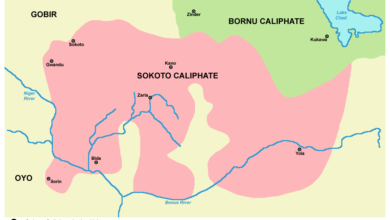
Shaykh Aḥmad Lobbo maintained correspondence and intellectual links with the scholars of Sokoto, whose writings he respected, yet he insisted upon the independence of the Māsina polity and did not subordinate it to the authority of Sokoto. The Dīna under his leadership extended its influence toward Timbuktu and sought to regulate the affairs of the Muslims in the region according to a single standard of the Sharīʿah. The capital Ḥamdallāhi became a centre of administration and of learning, though the intensity of the legal and social regulations also produced tensions with groups accustomed to greater latitude.
He continued to rule until his death in 1845. He was succeeded by his son Aḥmadu II, and later by his grandson Aḥmadu III. The state he founded endured until the early 1860s, when it was overcome by the forces of al-Ḥājj ʿUmar al-Fūtī. The later years saw internal strains and external pressures, yet the foundational work of Shaykh Aḥmad Lobbo — the establishment of a capital ordered by the Dīn, the attempt to apply the Sharīʿah systematically, and the elevation of scholarly counsel in governance — remained the reference for those who came after him.
The historical record of this tajdīd rests upon the Arabic writings produced within the Dīna itself, including the polemical and legal literature associated with its founder, the chronicles that later scholars composed to legitimise its authority (among them materials connected to the Tārīkh al-Fattāsh), and the observations of those who witnessed or studied the state. These sources show a movement that began in teaching and critique, passed through Jihād when the obstacles to the Sharīʿah could not be removed by other means, and sought thereafter to build a society in which the law of Allāh ordered public and private life.
The lesson of Shaykh Aḥmad Lobbo’s effort is that tajdīd in a region long subject to mixed rule requires both the clarification of the Dīn through knowledge and the readiness to establish a polity that can protect and apply it. He diagnosed the ills of his society, gathered a community upon the call to the Sunnah, and when the way was opened he founded a capital and an administration intended to embody that call. The difficulties that later arose do not erase the seriousness of the original intention or the scale of what was achieved in placing the Sharīʿah at the centre of governance in the Inner Niger Delta.
May Allāh have mercy upon Shaykh Aḥmad Lobbo, accept his Daʿwah, his Jihād, and the state he established for the sake of the Dīn, and raise his rank among those who strove to make the word of Allāh uppermost. May He grant this Ummah in every generation scholars and leaders who combine knowledge with the courage to act upon it. Āmīn
Bārakallāhu fīkum.